2016 Dirty Kanza Part II – Prep / Training

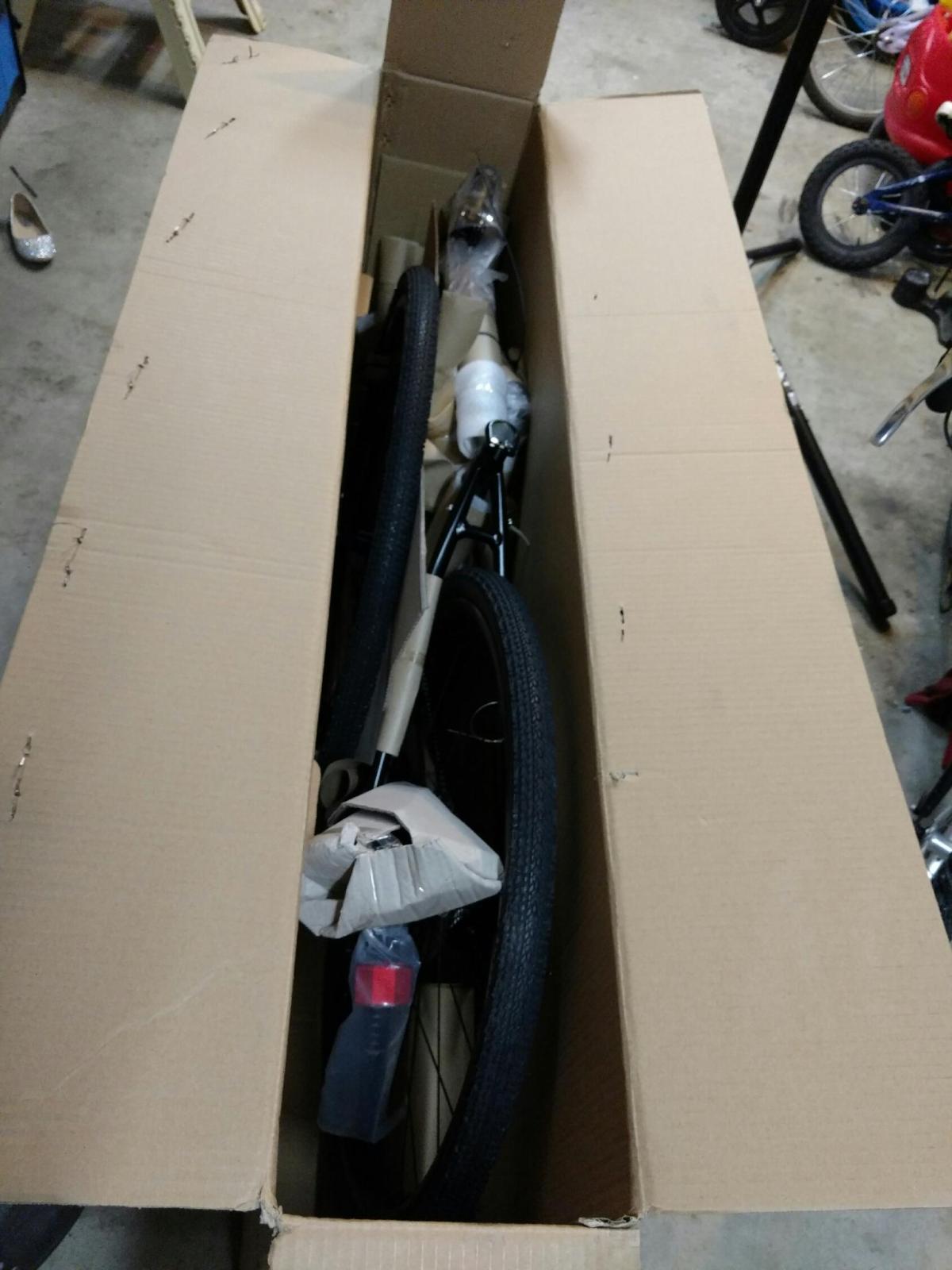
The pic above is my entry for the 2016 DK200 unboxed.

Note:  this post is about my first-ever Dirty Kanza 200 experience on June 4, 2016. 

Read Part I – The Signup

Part II – Prep / Training

Read Part III – Friday

Read Part IV – Starting Line

Read Part V – Checkpoint One

Read Part VI – Hitting The Wall

Read Part VII – Checkpoint Two

Read Part VIII – Checkpoint Three

Read Part IX – Finish Line


Introduction to Prep & Training

Part II is long and not important to this story’s narrative.  It  will describe the preparation of machine and physiology for the rigors of a two hundred mile race.  Read if you want to learn about the details, otherwise skip to the next part.

Disclaimer

Nowhere near my name does the word professional appear with respect to exercise or cycling.  I have been doing both for many years, but only as an amateur, and of late as an enthusiast.  I have many years of experience, and will impart wisdom in areas that I can claim expertise.

The Bike

OK, we’ve signed up, now what?  I’ve never before ridden an organized gravel race and nothing over 100 miles.  Where do I start?

Start with the bike.  I could write a post outlining the considerations of selecting one for an event like this.  It’s well-trodden ground and I’ll leave it for the pros.  Here we’ll describe my selection and rationalize – just a little.

The Decision for a 2015 Raleigh Willard I

My brother Tim ordered and assembled three 2015 model Raleigh Willard I bikes for Dan, Kelly and I to use.  These bikes are aluminum-framed.

I have read a lot about the advantages of the various frame types (steel, aluminum, carbon fiber, titanium) and tried to make an informed decision.  I reckoned comfort was futile because the bike will be vibrating like crazy due to the roughness of the chert gravel roads in the Flint Hills.

I already knew that aluminum was cheap, durable, lightweight, and stiff.  Most of the bikes I’ve ridden over the past 20 years have had aluminum frames.

Cheap is always good because it means I can afford one.

So too are durable and lightweight. Their importance grow when we factor in my weight and gear.

Stiff will be mixed.  Not good on vibration, an important factor.  Good on downhills.  Velocity is a critical factor.  There will be lots of downhills at Kanza.

Hmm, must think more on this.   The stock 40 mm tires will smooth out the ride negating much of the stiffness of the aluminum frame (right?).  There’s also vibration dampening seatposts that can take the edge off.

I was lukewarm to the idea of disc brakes.  The added weight is OK, but I have not always been pleased with its performance.

So after weighing the pros and cons, not the least of which was budget (I still had lots of stuff left to get), the Raleigh Willard I seemed like a smart buy.

Here are the factory specs
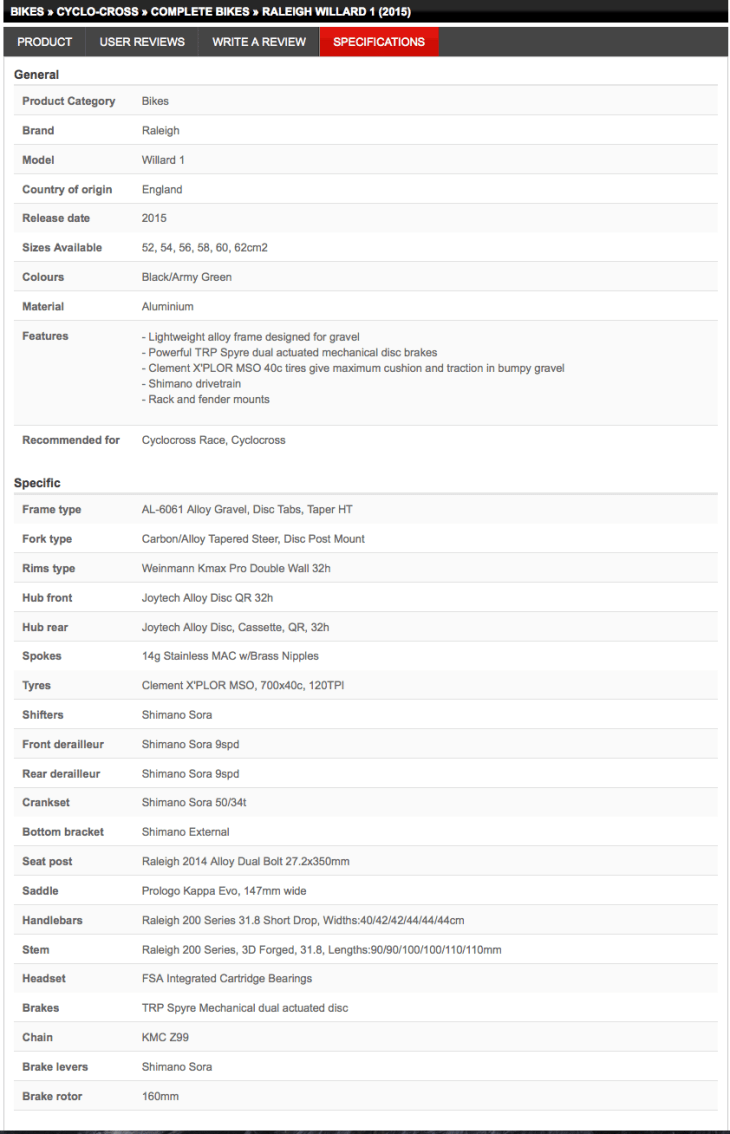
Screen Shot 2016-06-14 at 11.00.24 AM

specs for 2015 Raleigh Willard I

Assembly / Setup

Tim’s an experienced bike mechanic and did the assembly from his garage in Salt Lake City before shipping to us.
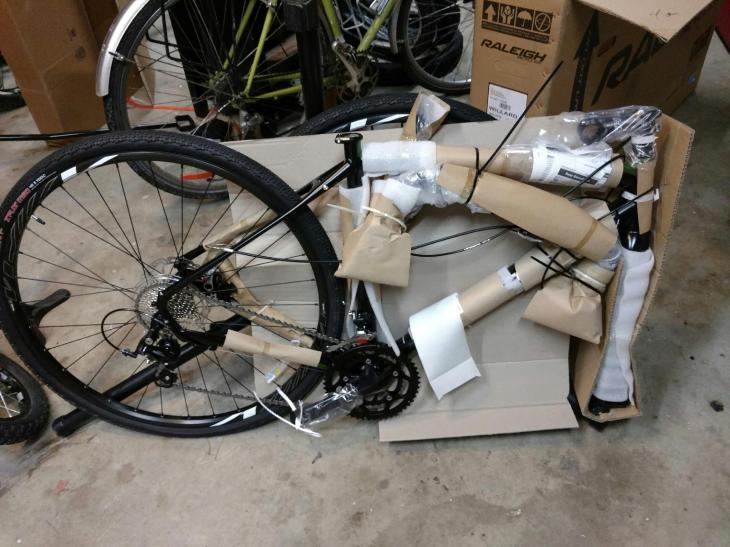
IMG_20160210_195644018(1)

The Raleigh Willard yet to be assembled in Tim’s Garage.

He did a great job getting them ready.  Here’s mine again newly assembled. (size 54)…
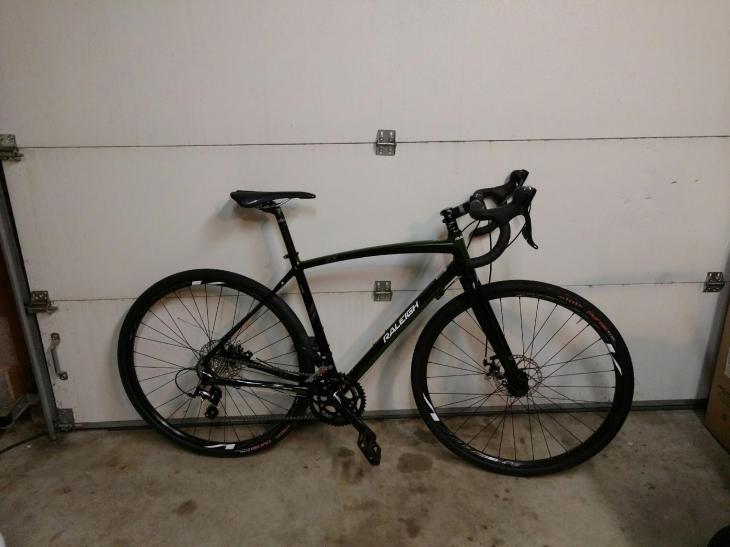
IMG_20160210_224555647(1)

2015 Raleigh Willard I fully assembled

Modifications

I adjusted the setup from stock by adding and changing the following things:

  1. Bontrager Montrose Comp saddle (comfortable)
  2. Specialized CG-R carbon seatpost (vibration dampening)
  3. 11-32 rear casette (wider range with lower low and a higher high)
  4. Schwalbe Marathon Mondial 700×40 RaceGuard tires (more rubber)
  5. True Goo self sealing tubes (not taking any chances)
  6. Revelate Tangle frame bag (w/ platypus 1.8L bladder, spare tubes, food, battery packs, cue sheets, maps)
  7. Two cages (w/ 24 oz water bottles)
  8. Velo Cateye bike computer (simple distance / speed)
  9. Garmin Edge 800 GPS unit (direction )
  10. Gopro digital camera (fun)
  11. Cygolite Metro 400 headlight (> 8 hrs life w/ batt pack @ medium intensity)
  12. Seat bag (w/ tire change tool, extra tube, multitool w/chaintool, 4 CO2)
  13. Frame-mounted tire pump (not taking any chances)

I carried enough gear to change about four flats in a row.  At the checkpoints there were boxes containing more tubes, spare chains, links, cables, and spare derailleur in case things went haywire.
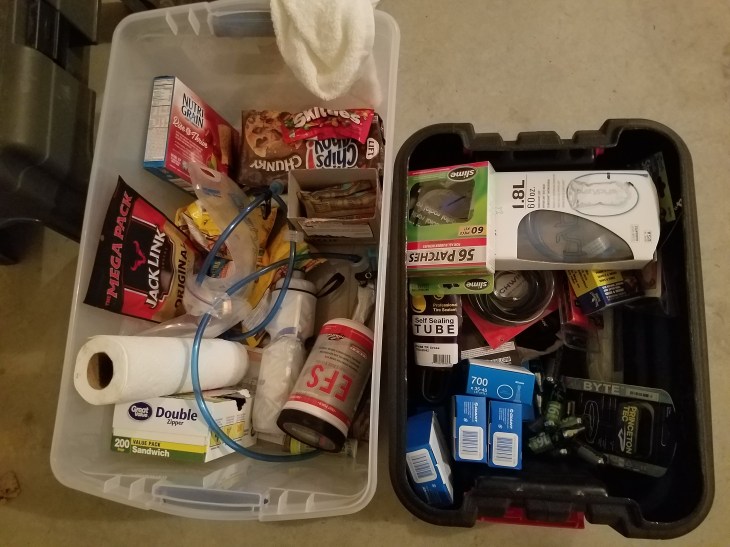
20160602_150314(1)

Boxes of gear

Each rider on our team carried one of these (somehow) on race day.
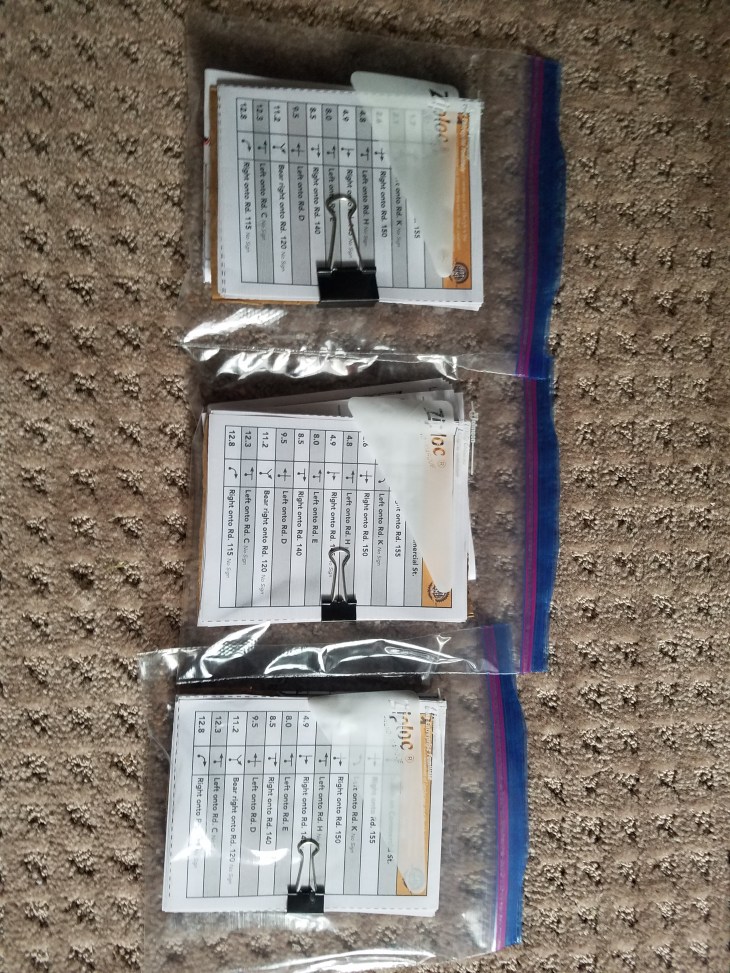
20160530_144747

cue sheets and course maps

Here it is with most of the mods listed above.
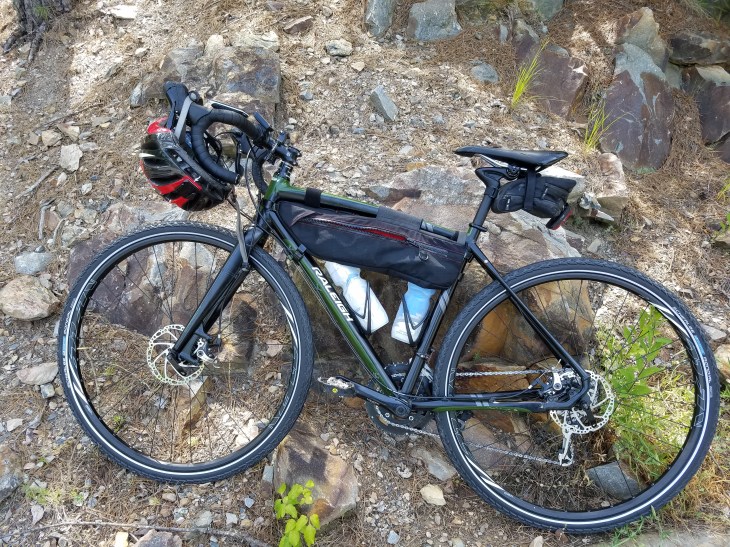
20160528_111023(1)

2015 Raleigh Willard I

Bike Summary

This bike performed flawlessly during the race.  No mishaps, flats, chain or derailleur issues of any kind.  Thanks Tim for all of the time you spent helping me to procure, assemble, modify and prepare this racehorse.  This part of the plan went perfectly well.

lessons learned

Next time I will double-wrap the handlebars.  I also will get better riding gloves (more padding).  206 miles on those roads == sore hands.

ruh roh gps

Problems with Garmin device going off course and pointing in the wrong direction.  This annoyance tuned critical later, in the 3rd leg, as the field spread (more on that later).

he told me so

Tim specifically warned me about this problem and recommended that I not use the gpx tracks but rather navigate off the base maps and an image overlay with the course.  I chose not to heed his sage advice and paid for it.  Luckily I found help, in the form of an angel.  (again more later)

more testing

I would have discovered the GPS routing problem if I had tested on location.  I purchased the Garmin device a few weeks prior – not enough time.

The Training

My training was simple and went according to plan.

Gradually increase the number of hours spent per week and its longest ride.  I had over four months until race day so there was plenty of time.  If for any reason a week is skipped or reduced, cross those days off but keep going with the schedule.

The goal, get to 75% of the total mileage.  I also wanted to get comfortable with the idea of spending long hours in the saddle, in the wind. I learned not to fight the wind but to accept it.  (sort of)

It was during these long rides that I formulated my pacing, fueling and hydration strategies.  I learned that I wasn’t fast, but I could comfortably average 14 mph (gun time) on most days and figured that would be good enough to get me across on June 4th.

Proposed Training Plan

#  Week of  Longest Day  Total Miles
1.  Feb  7           80          200
2.  Feb 14           90          210
3.  Feb 21           95          215
4.  Feb 28          100          220
5.  Mar  6          105          225
6.  Mar 13          110          230
7.  Mar 20          115          235
8.  Mar 27          120          240
9.  Apr  3          125          245
10. Apr 10          130          250
11. Apr 17          135          255
12. Apr 24          140          260
13. May  1          145          265
14. May  8          150          270
15. May 15          155          275
16. May 22          160          280
17. May 29          Taper
18. Jun  4          206

Simple is not always easy.  This plan looks brutal until you realize that I could take days or weeks off anytime I wanted.  This allowed my body to recover and get ready for the next big ride.  It also gave my mind time to rest which kept things fresh.

Perform one long ride every weekend and around 120 miles on the weekdays.  Vary miles and intensity on the weekday rides. 5×25, 4×30, 3×40, 2×60, 1×100, or all of the above.  Ride hills, flats, and combination.  Windy and calm days.  Fast, medium, slow or mixed tempos.  Hot, med and cold temps.  Rain or shine.  Keep the body guessing what is to come next but also on a steady training regime for endurance.  Don’t just put in the miles, set goals.  This is your chance to get dialed in.  One ride is to get comfortable with high winds.  Another hills, heat, rough gravel, or darkness.  Maybe a particular ride is just to have fun.

My actual performance followed the plan pretty well.  You can see there are some gaps in there but overall maintained the gradual buildup to 160 miles or 12 hours in the saddle.  During this training stretch I did about eight centuries.

Actual Training Log

#  Week of  Longest Day  Total Miles
1.  Feb  7           78            -
2.  Feb 14           89          210
3.  Feb 21           90          233
4.  Feb 28           63          186 (gravel)
5.  Mar  6          108          225
6.  Mar 13           94          156
7.  Mar 20           80           80
8.  Mar 27           37          113
9.  Apr  3          116          253
10. Apr 10          132          269
11. Apr 17          110          228
12. Apr 24           97           97
13. May  1          117          266
14. May  8          150          285
15. May 15          106          130
16. May 22          163          306
17. May 29           54          172  (hills)
18. Jun  4          206

I managed to get most of these training miles using my GPS on Strava account.

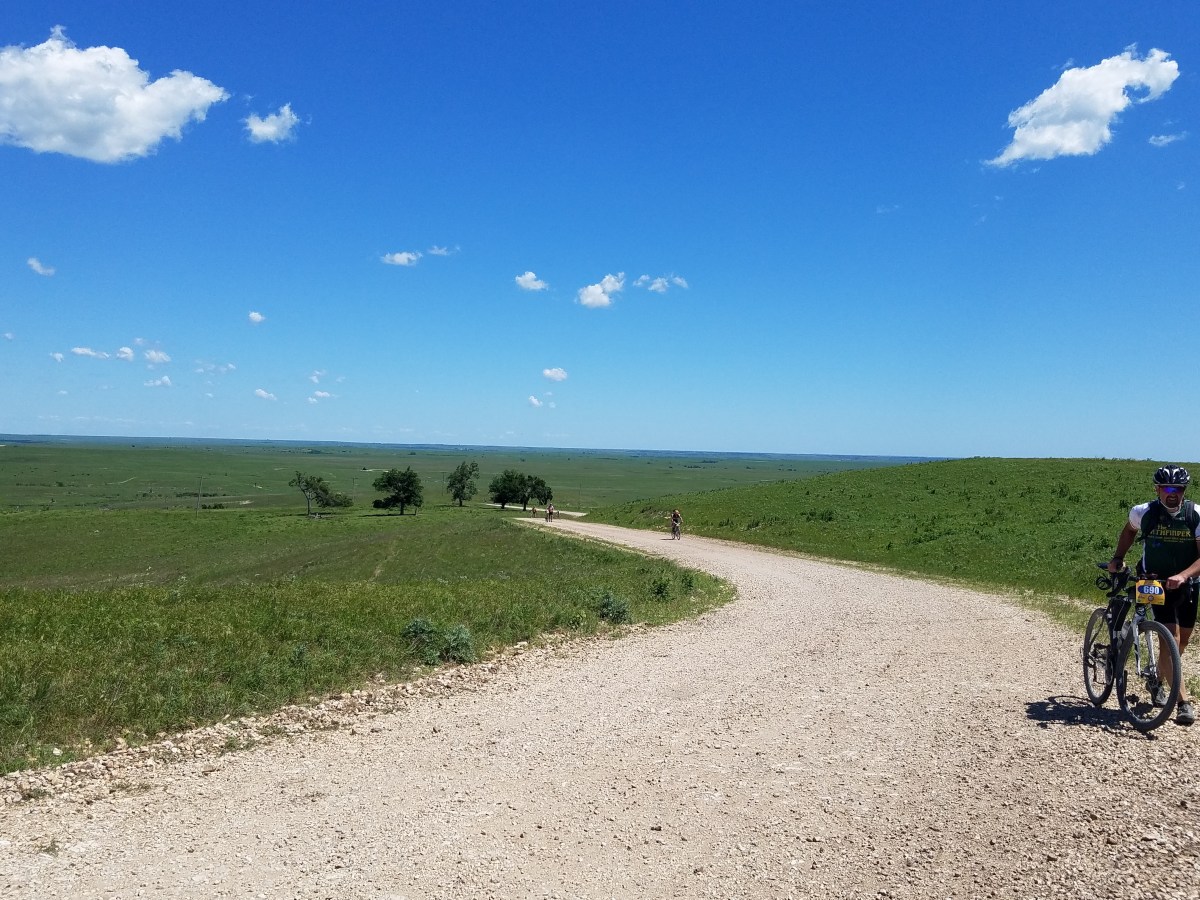
One big concern is most of this was on pavement and the race of course is on gravel.  There were about two or three weeks of gravel riding outside my parent’s hometown of Salina KS in Feb and March.
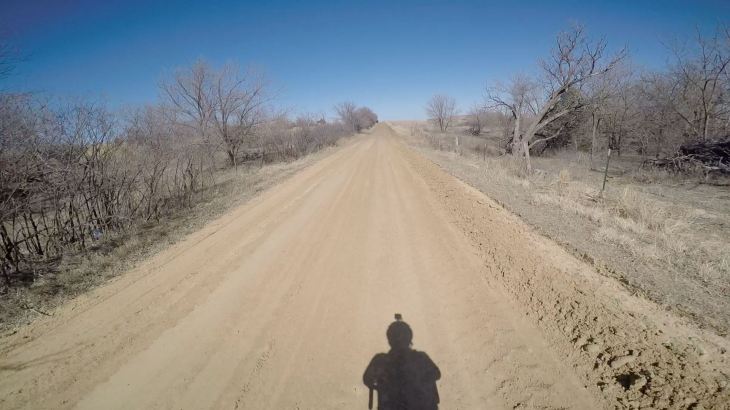
13048254_10207820059412152_7223808961348425689_o

East of Salina Feb ’16

And also one brilliant training day outside cottonwood falls.

I mostly rode the Willard, trying to get it setup right and also accustomed to it.  There were many great days of exploration.
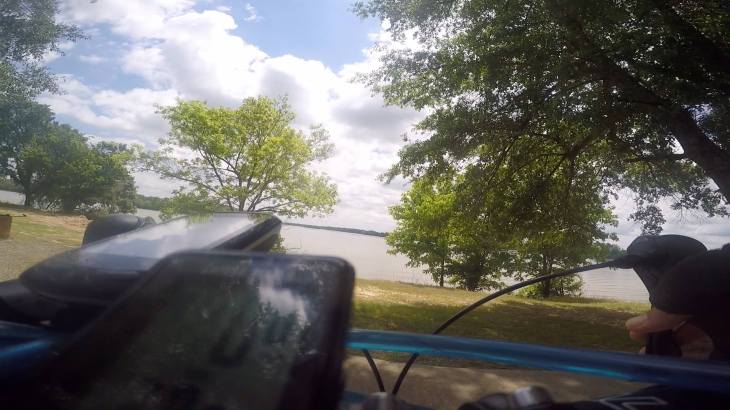
13227814_10207997303403141_4477590330239823748_o(1)

Along the Arkansas river, May ’16

Strength Training

The strength training helps with the intangibles of endurance cycling.  The long hours in the saddle become difficult to endure without a strong upper body and core.  To meet the demands of sudden bursts of anaerobic activity when lifting bike across water/mud or pulling hard to steer away from an onrushing hazard like a rut, rock, ditch, …

Weightlifting has been part of my fitness plan for many years.  As I have grown older, I have decreased the weights and increased the reps.  It’s not unusual for a particular set to have 50 reps for example.

My workout plan has three phases

One – Chest, Triceps

Two – Back, Biceps

Three – Legs, Shoulders

The particular workout session usually consists of a single phase within 30 minutes or less.  I often superset between muscle groups.  For example on phase three I can jump between a leg press and a shoulder exercise without stopping to rest between the sets.  Back and forth.  This adds an aerobic element to a workout session and helps to alleviate boredom.

The number of days per week will vary according to where I’m at on the bike.

If I am riding long hours, I will probably not go to the gym that day.  Days with short or no rides I’m usually doing strength training.  I focus on the fundamental and traditional exercises.  Pushups, situps, pullups, dips, flies, leg presses, curls, etc.

Keep It Simple Stupid.  No heavy sets.  No squats, no barbells, no deadlifts.

Don’t ignore the legs.  Leg presses always use high reps, low weights. Calf extensions follow the leg presses (on same machine) and also should be high reps.  Leg curls if it doesn’t hurt on a given machine.  Be careful, not all leg machines are good.  Leg extensions never good.

Also maintain care with shoulders.  Presses are done using dumbbells and perfect form.  Military presses only with light weights and usually on a machine.  Focus on the rear and lateral delts (helping to maintain a healthy rotator cuff).

These movements should feel good.  If you feel pain, stop (the inverse of no pain no gain). If the pain associated repeats with that exercise across multiple days, find another way to work that muscle group.

The goal is to continue cycling for as long as possible which has nothing whatsoever to do with how much weight is on the bar or the amount of time spent lifting.

Short sessions means not dreading which keeps it fresh.  Remain on lookout for new exercises or new ways of doing old ones.

Invest time doing core strengthening exercises.  They can be performed during any phase.  Use various types of movements to avoid overuse and injury.  These movements will help with more time in the saddle, and in particular, down in the drops.

Training Summary

My training plan was successful in getting my body, mind and machine ready for the Dirty Kanza 200.  The long rides exposed many weaknesses in my technique that had to be worked on.  As I got better at training and recovering, my confidence grew.

I managed to add a little hill training into the last couple of weeks and would have liked starting it sooner.  Other areas needing improvement is more time riding in places like the Flint Hills. One, maybe two fifty mile legs along a previous DK route would be a perfect way to access readiness of body and machine.

Hydration

For hydration I used Electrolyte Fuel System (EFS), two 24 oz bottles and a 1.8L bladder inside the frame bag on the bike.  It was nice not having to wear a camelbak and could drink different types of fluid at the same time.  For example, pure water in the bladder, and EFS in the bottles, was a typical setup.

I like the fluids cold (it’s the simple pleasures) and would always chill &/or ice fluids to the minimum temperature possible for any given ride.

At checkpoints this year our support team, lead by Cheri Parr (more on her later), provided bandanas loaded with ice and soaked in ice water, to wrap around our necks before setting off.  These seemingly small details have a way of tipping the lever toward a successful outcome.

Hydro Summary

My hydro strategy was fine for DK200.  I did experience a dehydration problem on the second leg of the DK race, but that was a problem with execution.  A combination of incorrect mixture and not carrying enough pure water (should have carried one more liter in jersey).

Food

My nutrition plan was also simple.
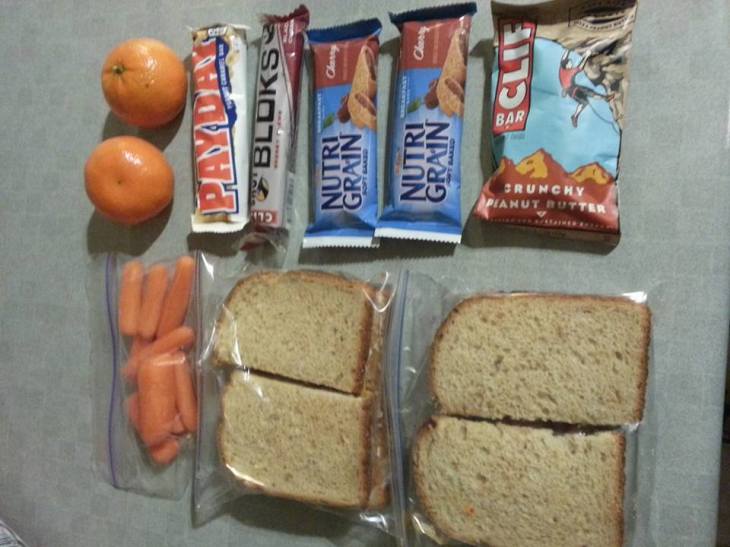
12512648_10207703622701307_4658815755279780693_n(1)

Typical frame bag goodies packed on a long ride

As you can see, I’m not big on the typical performance fuel products.  I favor fresh foods over processed but will carry things like M&M’s, nutri grain bars and the like.

I experimented a bit foolishly and learned that salad-in-the-bag is not a good concept.  🙂

I also don’t have room in my bag for fresh produce on race day but will look for it at the checkpoints.  Oranges, watermelons, peaches, apples, …, (all good).

Long into these rides (around 75 miles) I would stop at a local mart and get whatever they had available at the time and that sounded good.  These impromptu items varied from chicken fingers, to pizza, corndogs, burritos, etc.  For me, having something of substance late in the day is something that can be looked forward to early in the ride.  But if I had that slice of pizza it was just a single.

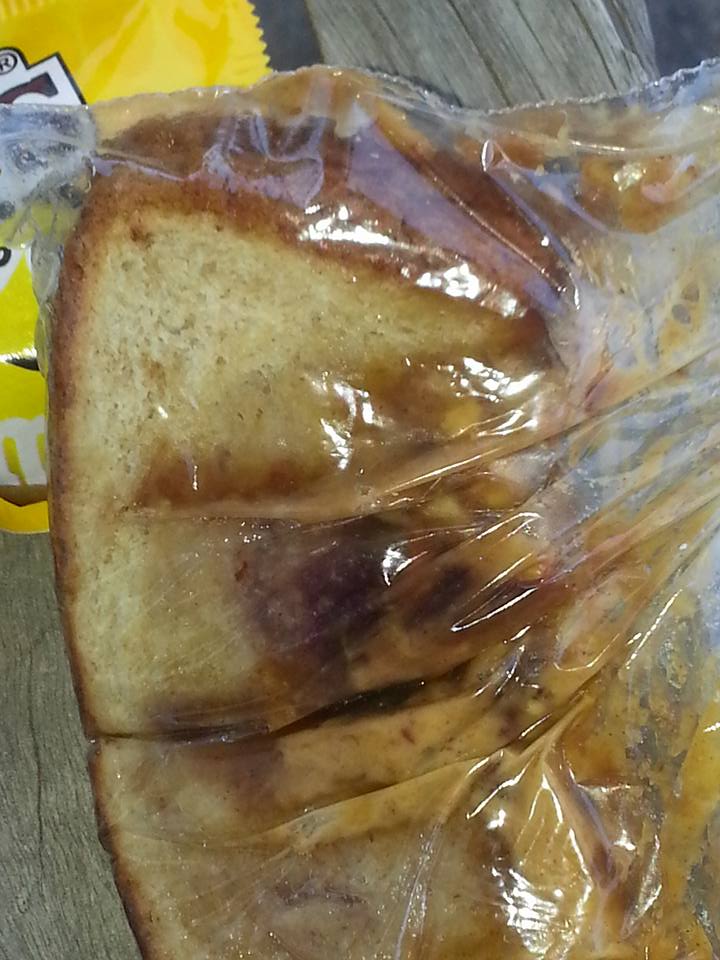
I also learned to eat gradually during the long rides and start early as possible, i.e. at 10 miles.  A PBJ or turkey sandwiches works well but only if eaten early on.  🙂
13178867_10207895664102222_2344735706543167312_n

PBJ after about 110 miles on a hot day.

Food Summary

My nutrition strategy worked fine for long training rides, i.e. over 120 miles.  But I found out on race day it doesn’t particularly hold up under the heat.  This is an area of my plan that needs more work.  Perhaps more of a reliance on the performance products.  Stay tuned…

Next Post: Part III – Friday
 

2016 Dirty Kanza Part IV – Starting Line

Note:  this post is about my first-ever Dirty Kanza 200 experience on June 4, 2016. 

Read Part I – The Signup

Read Part II – Prep / Training

Read Part III – Friday

Part IV – Starting Line

Read Part V – Checkpoint One

Read Part VI – Hitting The Wall

Read Part VII – Checkpoint Two

Read Part VIII – Checkpoint Three

Read Part IX – Finish Line


It was 4am Saturday June 4th in Emporia when my brother Kelly stirred.  We were doubling up in one of the Emporia State University dorm rooms and as he rose nothing had to be said.   I knew it was time.

I managed to push to the back of my mind that I had slept just two hours.  It was a morale buster and inconsequential to the plan.

Having already done the prep, just had to get up, do the last bio/mech steps, eat, and roll to the starting line.

After four months of planning the moment of truth.  It was almost a sense of relief despite knowing that the hard part had yet to begin.

Frame-08-06-2016-08-02-10

10 minutes before the start.

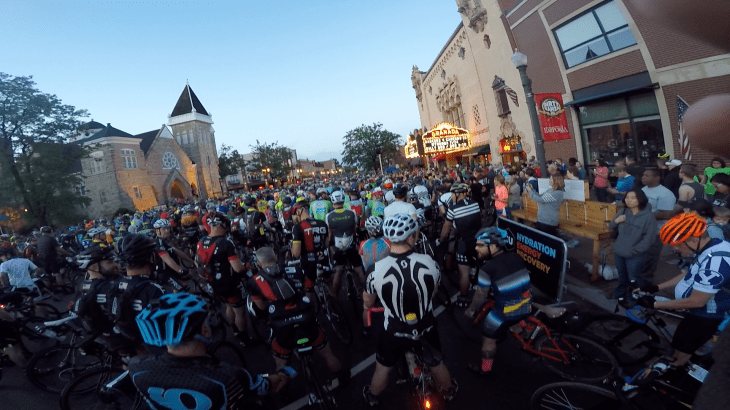
Also riding with us was my cousin Gregg.  This would be our first attempt at the 200 DK course.  Our confidence was high so we lined up with the 16 hour group.  Little did we know how optimistic that was.  The temps were cool, in the low 60’s, conditions clear and we’re ready to roll.

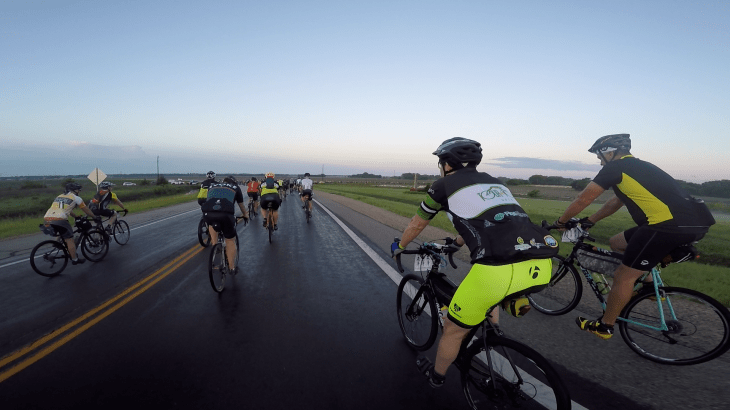
Next thing we know the race is started and we’re moving down the street to the joyous sounds of the crowds cheering and the cowbells clanging.

Once out of town we immediately saw that 100’s of riders were queued in front.

Frame-08-06-2016-07-56-01

Kelly and Gregg slow to a coast as we eye the backlog of riders ahead.

Ruh roh.  There was a bit of a downpour a few hours before and it flooded the first stretch of gravel.  Much has been said about the ensuing derailleurgeddon.  I’ve heard varying reports of how many riders were sidelined with broken chains and twisted derailleurs along this stretch.  I felt for those who couldn’t continue.  It was nerve-wracking for us and must have been gut-wrenching for them.  To train for months and out after a few miles.  Tough break.

Kelly, Gregg and I had discussed our race strategy the night before.  It was simple.  Take it easy over the first part of the course.  Let others surge ahead.  Nobody waits during the first 100.  Go at a comfortable pace.  The second half we pick it up a bit.  Like we trained.

But that’s not how it all played out.  After that slow crawl thru the mud and perhaps because of an unclear mind and lack of sleep, I became antsy and wanted to push faster…

Next Post: Part V – Checkpoint One

Dad with Kelly and Timothy circa early '90's.

2016 Dirty Kanza Part I – The Signup

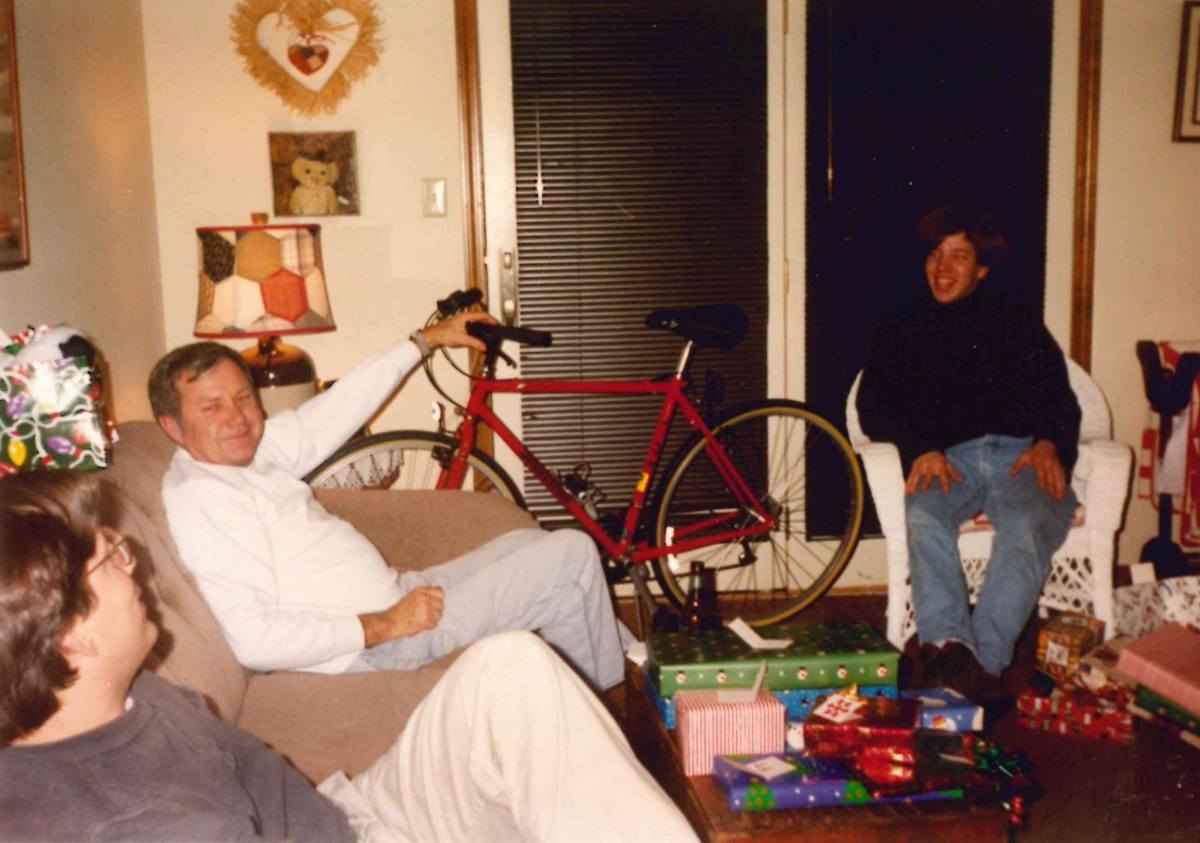
The pic above from l to r, Kelly, Richard, and Tim McKinney circa xmas ’91.

Note:  this post is about my first-ever Dirty Kanza 200 experience on June 4, 2016. 

Part I – The Signup

Read Part II – Prep / Training

Read Part III – Friday

Read Part IV – Starting Line

Read Part V – Checkpoint One

Read Part VI – Hitting The Wall

Read Part VII – Checkpoint Two

Read Part VIII – Checkpoint Three

Read Part IX – Finish Line


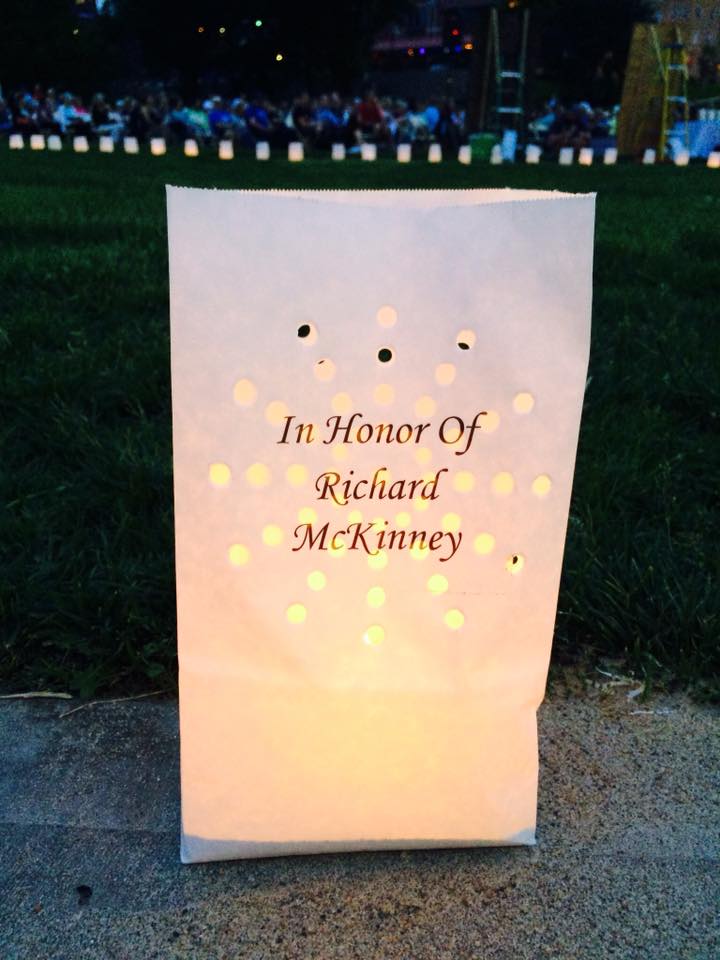
My father, Richard McKinney, passed away December 23, 2015.  He had suffered for about 10 years from a series of health problems increasing in severity.  Throughout that time I never heard him complain.  If asked he would declare all of the reasons he considered himself fortunate.

I owe my love for cycling to him.  From my earliest memories, there were plenty of bikes around.  First a Huffy Stingray hand-me-down in the late ’60s.  Later were the department store 3, 5 and 10-speeds, ’70s era European road bikes, and finally into the mountain bikes of the ’80s and ’90s.

In those days (early ’70s) parents let their kids run loose and we took full advantage of it.  In the summer, it was not unusual to leave right after breakfast and not return until just before suppertime (our cutoff ).  Pack up a few peanut butter and jelly sandwiches and we’re good to go.  We’d explore the countryside on bikes.  Pavement, gravel, singletrack and doubletrack.  Sometimes we’d run up against hobos making their way across the area via the highways and railroad tracks.  Maybe we’d come back carrying some kind of snake or turtle and Mom would not be happy.

“What do you think you’re going to do with – that?” she’d ask.

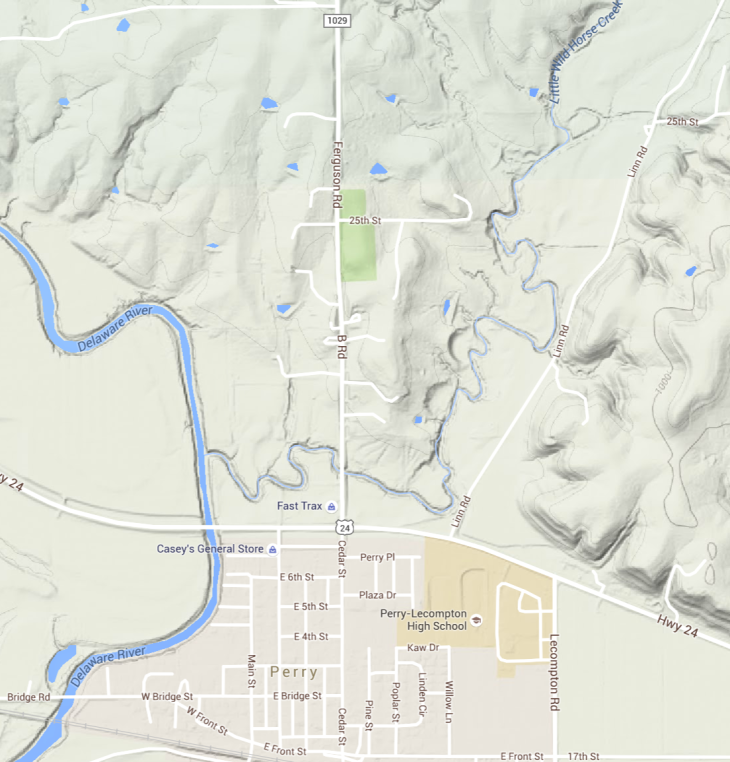
There were boundaries.  Don’t cross the Delaware River west of town or the US Highway 24 to the north.  Little Wild Horse Creek was especially off limits.  Kelly once cut his foot on a crossing, bad enough to require stitches.

Screen Shot 2016-06-21 at 1.03.37 PM

Perry KS hasn’t changed much 45 years later.

Beyond the creek were miles of unbroken ranch land to be explored. The hills NE of town was left by Pre-Illinoian glaciations 600,000 years prior and we couldn’t resist them. We’d hose ourselves down using the water spigot at the edge of town, before returning to our house, between the two churches, one Methodist, the other Catholic.

We thought we were being slick, but Mom would always find out.  Years later she told us how – muddy underwear from swimming in the creek.

Those were simpler times and our parents were not fearful like many are today.  The worst thing that ever happened was being prevented from riding due to a mechanical problem, missing a cutoff or going out of bounds, and getting into trouble (grounded).

A very poor quality Polaroid photo of us in Perry, KS (early ’70s)

1497899_10206908779790731_8985013281111561056_o

l to r, Kelly, Kevin and Shawn McKinney circa ’73

Years later, after I got too busy to ride, my Dad would throw hints by sending me home with new bikes to try out.  I’d mostly ignore his attempts during my 20’s and 30’s but he never gave up and once even sent me home with an electric bike (which I still have).

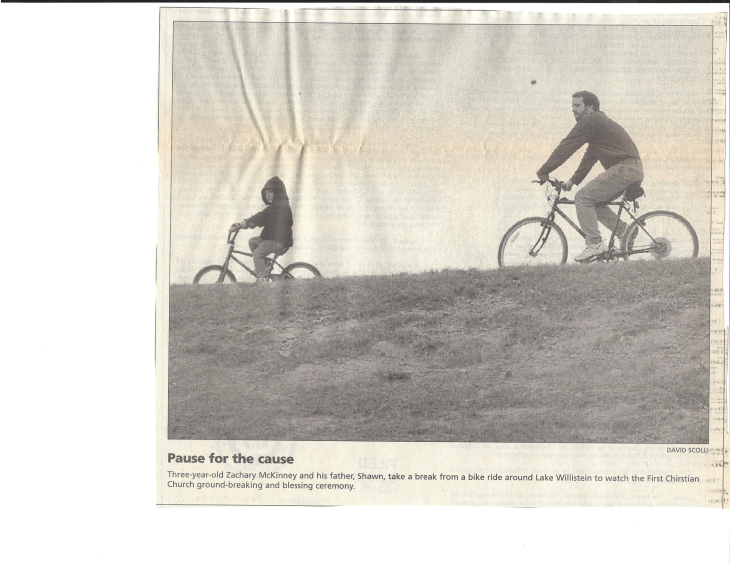
Here’s a newspaper clipping of me riding one of Dad’s hand-me-down bikes with son Zachary…

Zack&Shawn-Jan2000

From the local rag (Maumelle Monitor) Jan 20, 2000.

Over the years, as my passion for cycling has ebbed and flowed, I received steady encouragement from him.  Of late, as the number of hours in the saddle rose to extreme (crazy?) levels, he continued to support and applaud my accomplishments (modest though they were) never once hinting I might be overdoing it.

My younger brother, Timothy, completed the 2014 DK200 in just under 14 hours.  He subsequently dedicated the accomplishment and gave him his coveted Race Against the Sun award,  I was there acting as support for Tim, and the moment was not lost on me in terms of importance. The seed was planted.

So after Dad died talk returned to the Dirty Kanza and thoughts of signing up in 2016.  Before that time the race was on my bucket list but I had no concrete plans for making a run this year.  After the funeral, and with pleading from my family, we decided to go for it.

13245503_10153597833766156_3125960679442112175_n

When it became time to sign up I was leaning toward the Half Pint (100 miles).  To me it made sense as it would give a taste without having to commit to more training than I was accustomed to.

It was then my brother Kelly convinced me to do the whole enchilada.  You’ll get there in June and want to do the full distance he reasoned.  Somehow he swayed me and I signed up with him along with Gregg (cousin), and Dan (close friend).

Little did we know what we had gotten ourselves into.

600667_10206894322069297_9044119770813017364_n

Richard J McKinney 1935 – 2015


Next Post: Part II – Prep / Training


2016 Dirty Kanza Part VI – Hitting The Wall

Pic above 65 miles into the 2016 DK200.

Note:  this post is about my first-ever Dirty Kanza 200 experience on June 4, 2016. 

Read Part I – The Signup

Read Part II – Prep / Training

Read Part III – Friday

Read Part IV – Starting Line

Read Part V – Checkpoint One

Part VI – Hitting The Wall

Read Part VII – Checkpoint Two

Read Part VIII – Checkpoint Three

Read Part IX – Finish Line


Only 65 miles into the Dirty Kanza 200 and already getting worried; running at higher levels than anticipated.  Heart rate was a full 10 beats per minute over the expected.  Was this a malfunction in the HR monitor?  No, it’s working correctly.  This terrain was far more challenging than what I’d trained for and was causing me to work harder maintaining a decent pace.  I knew that going in but hearing about something and experiencing it firsthand are two different things.

By this time Checkpoint One was 15 miles behind.  That is when I began to sense the trouble.  Stomach had just stopped working.  I could nibble but had lost a real appetite.  I knew eating was the only way keep going.  At mile 50 you are fueling for mile 100.  Stop eating and run out of gas fifty miles later – he’s dead Jim.

Checkpoint One is where the mistake was made of replenishing all fluids (about 3L) with a combination electrolyte and calorie replacement mix.  The reasoning was sound.  Didn’t want to eat, maybe could compensate by drinking.  Normally on a day like this (hot), it would be half pure water, half EFS (chosen mix).  Ten miles past that checkpoint the mixture had become warm/syrupy/sweet/salty and it took everything I had just to continue drinking – it.

What I’d have given for a cold bottle of plain water!  My body was becoming dehydrated and that plays tricks on the mind.  Began to fantasize about how good that water would taste.  Longing for it.  Yet I still had over 35 miles before Checkpoint Two, during an unsupported race, no aid stations, towns, quickmarts or help from my support team – unless I wanted to quit.

Around this time a jeep was passed, parked on a hilltop, off the road about 20 meters.  I stopped and hailed the driver.

“I’ll give you five bucks for a bottle of water,” I told him, only half joking.

The driver chuckled and replied he’d be happy to “give” me one.  I found out later he was a member of a Kansas City jeep club that patrols the area every year.  Not sure what their mission is specifically but suspect it’s to act as first responders when things go awry for riders who get in over their head.

That bottle was a small one, but got me another 10 miles, before once again thoughts of dehydration set in.  Knowing these races are as much mental as physical I squelched the negative thoughts, took another swig of the knarly mix, and dug in for the next big climb.  Whoever said Kansas was flat never rode these sections.  Checkpoint Two was still over 25 miles away so I had to make the most out of the resources I had.  Nasty or no I’m gonna drink that swill.

About halfway into the next hill my left quad began cramping.  Brief stabs of excruciating pain.  Felt like a sharp knife being inserted deep into the muscle.  “No!” I proclaimed loudly and pounded on the leg using my left fist as a hammer, followed by an attempt to massage away the spasm by grasping it fully and squeezing hard.  I’m sure any riders who were nearby thought I had gone stark raving mad.

“This is NOT going to happen!” I cried again, nearly at the top of my voice.  After months of training, with it’s thousands of miles and expenditures, not gonna end here, like this.  As the cramp eased I worked my way, slowly, over the top of the hill, pedaled gently down and steadied myself for the next big climb, with it a new concern…

20160604_115430

Next Post: Part VII – Checkpoint Two


Why Bugs are Good

Goes against the grain of conventional wisdom.  The nastier, the better.  How can this be?  Let me state the ways.

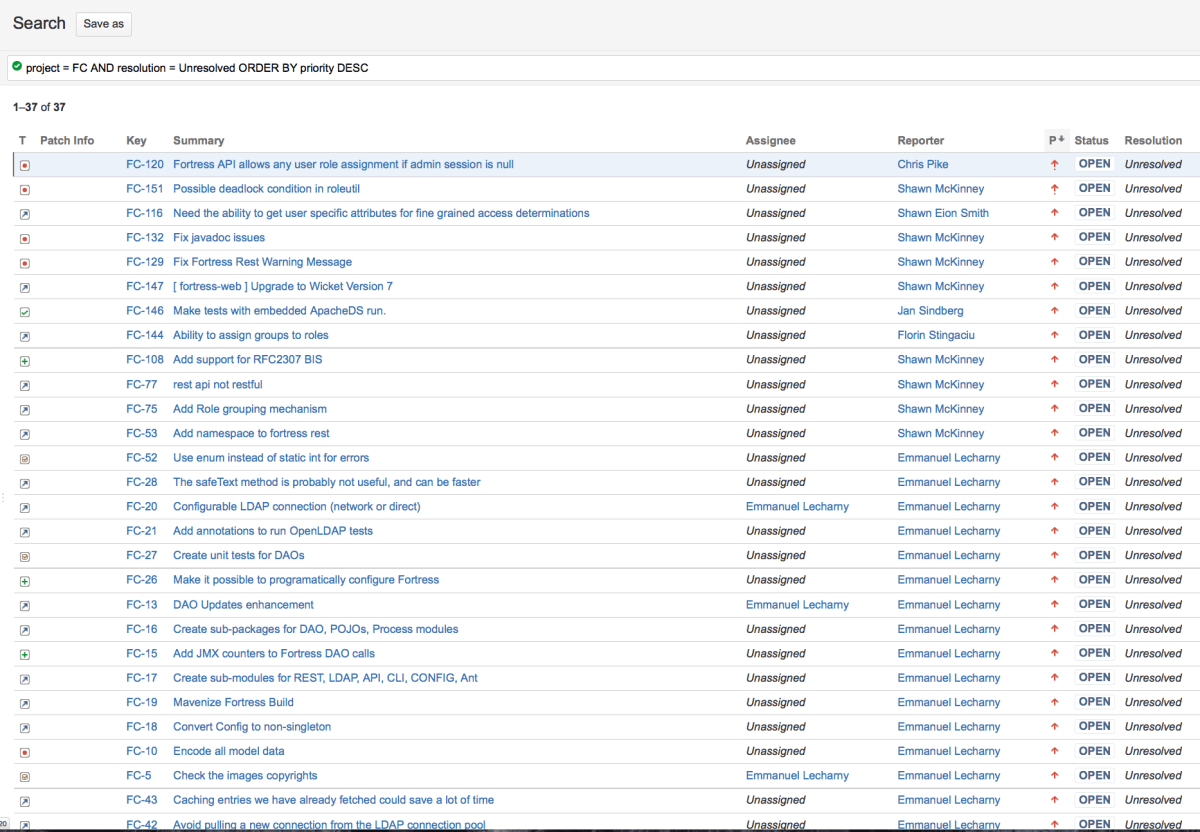
  1. Status.  It demonstrates an active project.  If you go to their bug tracking page and can’t find a bunch of open defects, something is wrong.  It’s dead, Jim.
  2. Relevance.  Shows that people are using it.  Early on, I once heard a developer proudly proclaim his code never has bugs.  That I still remember 25 years later is a testament to how profoundly stupid of a statement it was.  If your code doesn’t have bugs, it’s not being used.  The more it’s used, the more bugs to find.
  3. Excellence.  Bugs bring out the best in us by challenging our assumptions and testing our abilities.
  4. Openness.  Let’s admit it, we only hide when embarrassed or scared.  Much better to own up, accept the consequences, move on.

LDAP is dead. Long Live LDAP!

David Goodman’s keynote, LDAP 2020 Paradise Lost or Regained?, provides a retrospective for us to contemplate. In it, he describes LDAP’s roots (X.500), where it’s been (U of Mich, Netscape, Sun, Symas, Microsoft, ForgeRock, etc.), and offered insights of what needs to change.

Bottom line, it’s healthy to continually ask the question – Is LDAP dead?  For the answer, we’ll only slightly alter Mark Twain’s famous quotation:

Reports of LDAP’s death have been greatly exaggerated.

Why is that?  For starters, because of conferences like LDAPCon. More than its in-depth technical analysis and tutorials, is what happens in the spaces between the talks.

These spaces nurture the protocol by allowing free discussions on the flaws, and room to create plans for corresponding fixes/enhancements.

Just what are these fixes and enhancements?  Have a look at the program and slides.  Subscribe to the LDAPExt mailing list, share in best practices, and above all, keep attending LDAPCon!

See you at LDAPCon 2017!!

JavaOne Survival Guide

With next week being my 12th time at JavaOne, here’s some wisdom for those who’ve never been.

  1. Use the schedule builder.  Many sessions fill up early and if you didn’t reserve your seat you’ll be stuck in overflow.

  2. Don’t miss the Oracle Appreciation Event.  It’s one of the hottest attractions in San Francisco.  Event bracelets are highly sought after and traded by the locals on the free market.  I recommend leaving well in advance of the encores to avoid the long queues that gather for the return bus trip.

  3. Enjoy a brew at the Thirsty Bear a block from the Moscone center.  You’ll be glad you did.  And don’t skip the tapas.

  4. Attend the BOFS.  More casual (and fun) than the event keynotes or technical sessions.  BOFs are a great way to meet the leading minds working with Java.  The relaxed format encourages audience participation and are a way for your voice to be heard.
  5. Trouble reserving a room within your price range nearby?  Try renting an Airbnb apartment.  Often times apartments may be rented for a fraction of the cost you would otherwise pay for a hotel room.
  6. Take the BART.  No need to rent that car or pay $40 in cab fare.  BART has terminals at both local airports, is fast, easy and cheap.
  7. Get out and walk a bit.  Market Street (shopping), Union Square (more shopping), and China Town (eating and sightseeing)  is walking distance from the conference hotels.  Better yet, stop by the Embarcadero for a ride on one of the ferries shuttling commuters across the bay.

    If you’re lucky you might snag a bar seat at the Slanted Door which is one of the best restaurants in town.

    Need a laugh?  Check out Pier 39’s Sea Lions at the Wharf.

  8. Stay until Friday.  Avoid the mad rush to the airport on Thursday afternoon.  The conference pace slows to a crawl which is nice after all the earlier hustle and bustle.  There’s usually plenty of free beer left as Oracle tries to drain the last of the kegs.

The Seven Deadly Sins

These personality traits destroy engineering projects:

  1. Stupidity is the most obvious toxic personality trait found on this list.  Engineers of this caliber leave a trail of destruction wherever they go.  Under qualified for all but the most basic tasks, ill-equipped to solve problems, repeatedly makes the same mistakes, requires constant hand-holding 1
  2. Hubris is harder to spot because the possessor’s swagger acts as a cloaking device.  Eventually the weight of repeated faulty assumptions catches up.  Known for diving headfirst down rabbit holes and not pulling back until after the damage is done.  Frequently the naysayer, stands in the way of practical solutions in favor of counter proposals with snowball chances in hell.
  3. Sloth a.k.a the sandbagger. Tasks of critical importance somehow are never their responsibility.  First to give up, known for coming in late, leaving early and disappearing for long periods of time.  Taken alone, they cost, but one resource. Beware the sandbagger however, their presence Demotivates.
  4. The Over-extender is the least undesirable due to good intentions.  Doesn’t know how to say ‘no’.  They hurt projects because of bottlenecks created by unfinished tasks.
  5. The nitpicker can’t shut up.  Feels the need to speak the truth in spite of the greater good.  Their constant stream of disparaging comments damages morale.  Worst when found in the leaders; the spawned negativity permeates the atmosphere with fear and dampens creativity.
  6. The micro manager will expect a detailed explanation for everything under the sun.  Has an obsessive need to stay informed about every nuance.  Can be dangerous in a crisis, delaying first responders when their presence is most needed.
  7. Fear a.k.a. Elmer the FUD, is stuck in the past.  To say Elmer’s overly conservative is an understatement.  Frightened by anything new and blocks innovation reflexively.
  8. Bonus: The Firestarter, a.k.a. gaslighter, ignites the workplace with artfully applied little jabs. Twisting words of coworkers seen as rivals into insults, just for kicks. One way to counter is to play dumb and have them repeat, “Sorry, I don’t understand what you mean… What did you say?”

Footnotes

1. We’re not talking about trainees here. Professionals with many years of experience and incapable of functioning without help within their core competencies.

JavaOne Open Source IAM Expert Panel

Once again we’ll be meeting in San Francisco for a Birds-of-Feather.

Open Source IAM Expert Panel Part 4


Abstract
There is a growing need in the market today to provide open source identity and access management (IAM) solutions that are both comprehensive and easy to use. Despite this growing need, the track record for open source solution providers in this space has been mixed. This session provides an opportunity for dialogue between those that need such products and those that create them. The goal of the session is to provide the attendees with information for better exploiting the products available today and to answer any questions they may have. At the same time, they get an open forum in which to provide ideas on what needs to change going forward.

Panelist
Igor Farinic, Senior Software Engineer, Cofounder, Evolveum
Les Hazlewood, Cofounder and CTO, Stormpath
Misagh Moayyed, Software Engineer, Unicon, Inc
Bill Thompson, Director, Digital Infrastructure, Lafayette College

Moderator
Shawn McKinney, Systems Architect, Symas

Schedule
October 26, 7:00 pm – 7:45 pm | Hilton—Plaza Room A
BOF (Birds-of-a-Feather) Session

Slides from previous events

  1. Part I – October 1, 2012
  2. Part II – September 23, 2013
  3. Part III – September 30, 2014
  4. Part IV – October 26, 2015

Apache Fortress SAML Demo

The aim of this tutorial is to connect Apache Directory Fortress with Spring Security SAML and a common Identity Provider – SSO Circle.com. It’s not intended to highlight all of the possible locations in code where security checks may be applied.  For that take a look at The Apache Fortress End-to-End Security Tutorial.


Fortress SAML Demo

Go to https://github.com/shawnmckinney/fortress-saml-demo, complete the steps under the README.

More info here: Fortress-Saml-Demo

Saml-Demo-Block-Diagram-Master