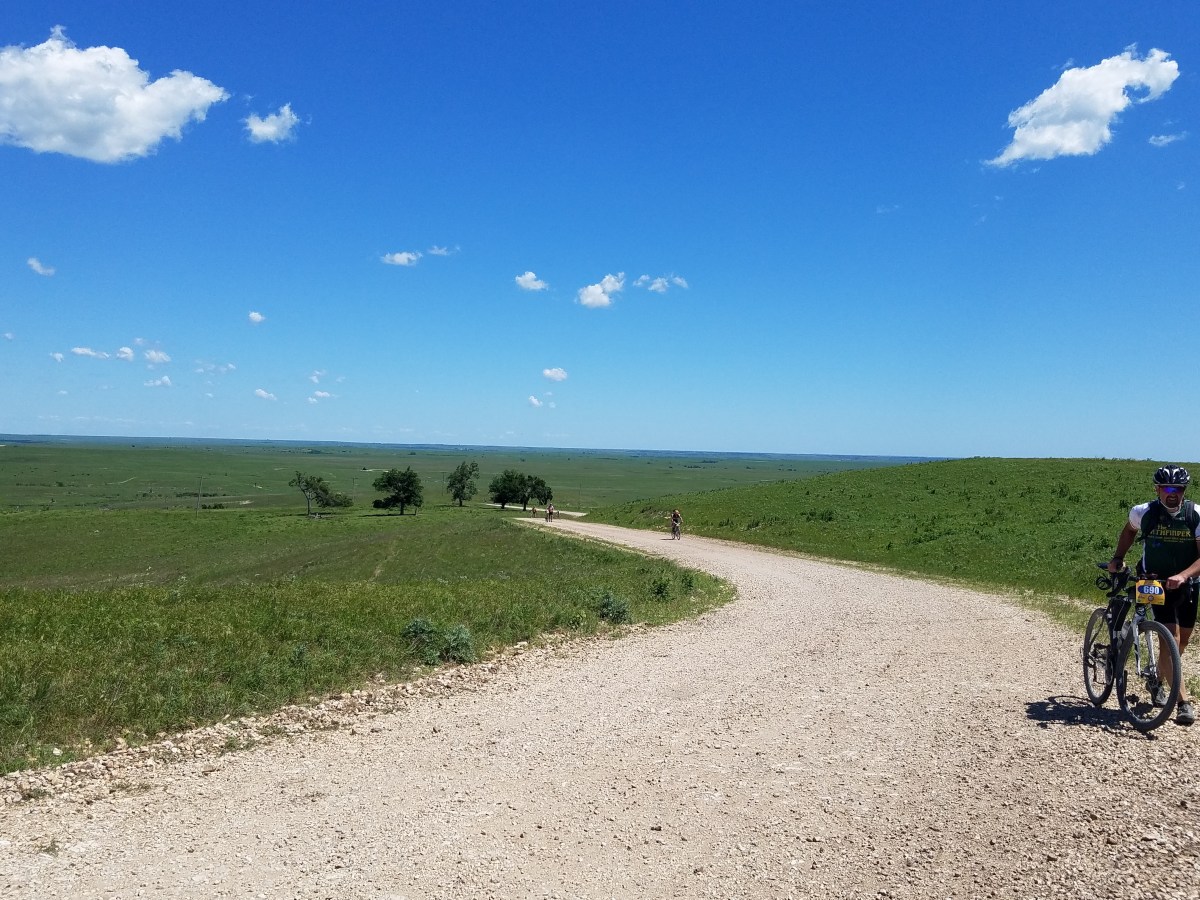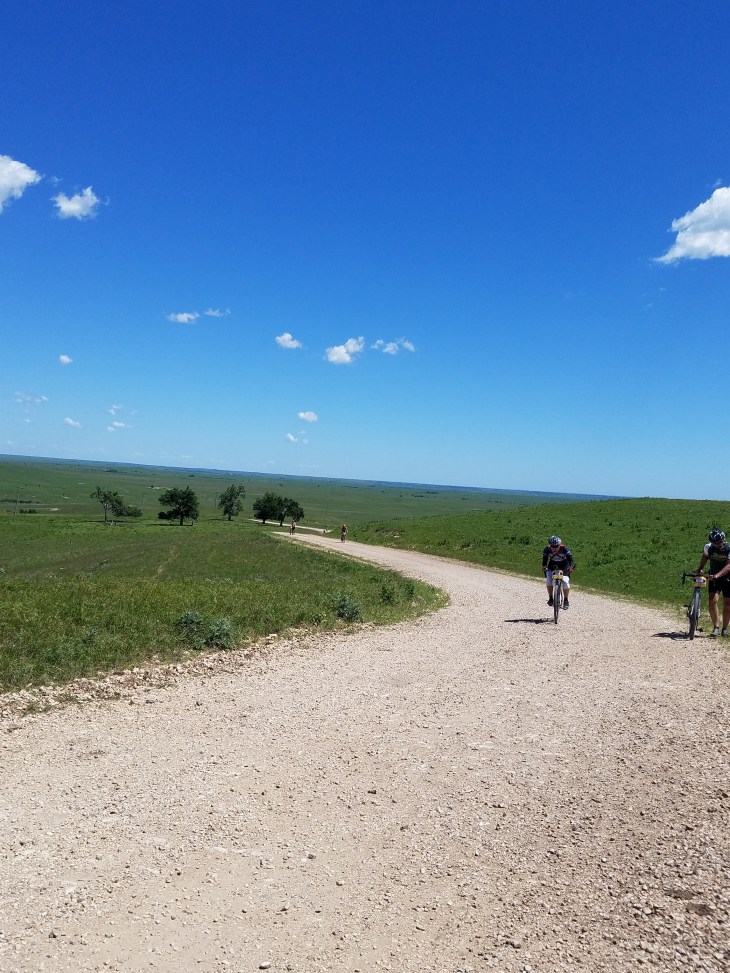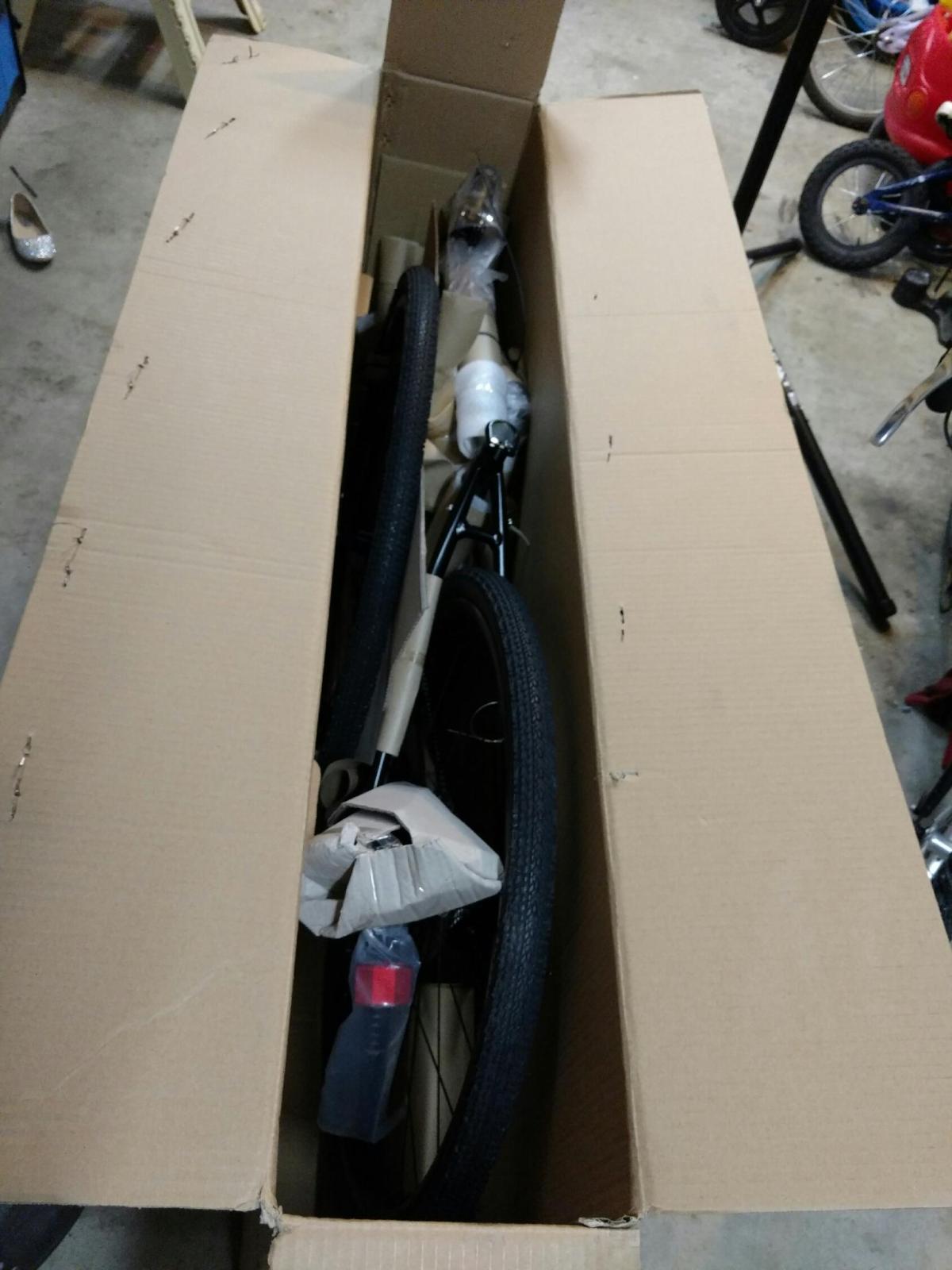
The pic above is my entry for the 2016 DK200 unboxed.
Note: this post is about my first-ever Dirty Kanza 200 experience on June 4, 2016.
Part II – Prep / Training
Read Part VI – Hitting The Wall
Read Part VII – Checkpoint Two
Read Part VIII – Checkpoint Three
Introduction to Prep & Training
Part II is long and not important to this story’s narrative. It will describe the preparation of machine and physiology for the rigors of a two hundred mile race. Read if you want to learn about the details, otherwise skip to the next part.
Disclaimer
Nowhere near my name does the word professional appear with respect to exercise or cycling. I have been doing both for many years, but only as an amateur, and of late as an enthusiast. I have many years of experience, and will impart wisdom in areas that I can claim expertise.
The Bike
OK, we’ve signed up, now what? I’ve never before ridden an organized gravel race and nothing over 100 miles. Where do I start?
Start with the bike. I could write a post outlining the considerations of selecting one for an event like this. It’s well-trodden ground and I’ll leave it for the pros. Here we’ll describe my selection and rationalize – just a little.
The Decision for a 2015 Raleigh Willard I
My brother Tim ordered and assembled three 2015 model Raleigh Willard I bikes for Dan, Kelly and I to use. These bikes are aluminum-framed.
I have read a lot about the advantages of the various frame types (steel, aluminum, carbon fiber, titanium) and tried to make an informed decision. I reckoned comfort was futile because the bike will be vibrating like crazy due to the roughness of the chert gravel roads in the Flint Hills.
I already knew that aluminum was cheap, durable, lightweight, and stiff. Most of the bikes I’ve ridden over the past 20 years have had aluminum frames.
Cheap is always good because it means I can afford one.
So too are durable and lightweight. Their importance grow when we factor in my weight and gear.
Stiff will be mixed. Not good on vibration, an important factor. Good on downhills. Velocity is a critical factor. There will be lots of downhills at Kanza.
Hmm, must think more on this. The stock 40 mm tires will smooth out the ride negating much of the stiffness of the aluminum frame (right?). There’s also vibration dampening seatposts that can take the edge off.
I was lukewarm to the idea of disc brakes. The added weight is OK, but I have not always been pleased with its performance.
So after weighing the pros and cons, not the least of which was budget (I still had lots of stuff left to get), the Raleigh Willard I seemed like a smart buy.
Here are the factory specs
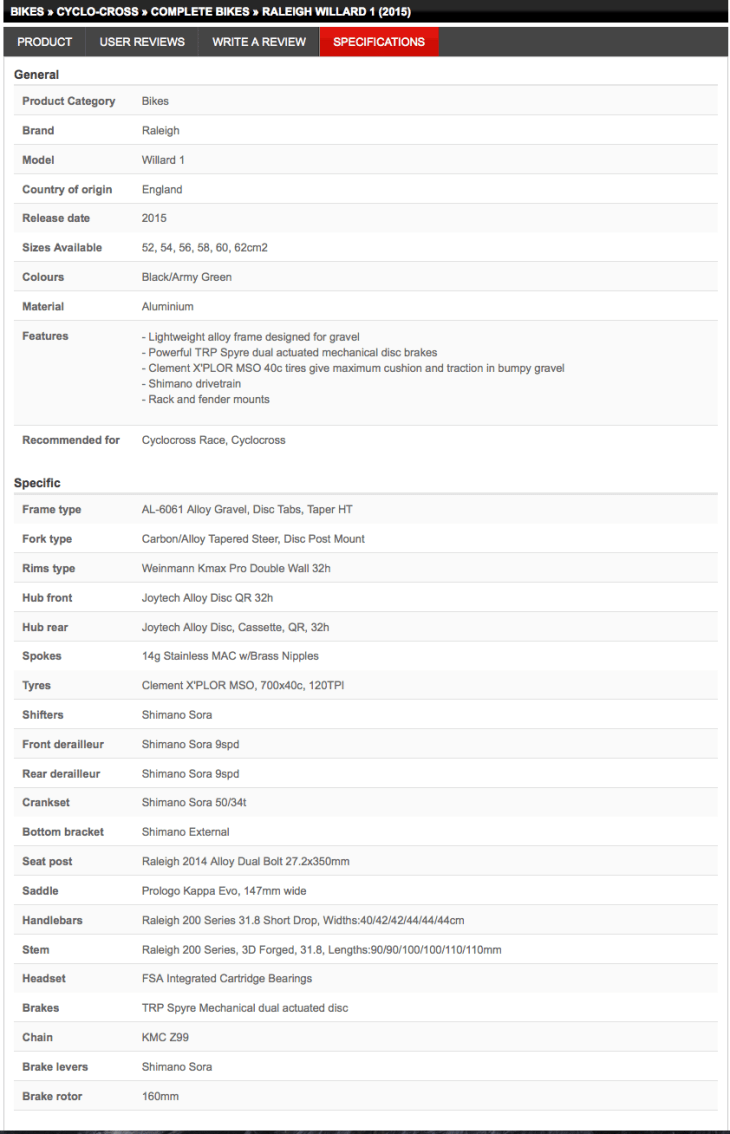
specs for 2015 Raleigh Willard I
Assembly / Setup
Tim’s an experienced bike mechanic and did the assembly from his garage in Salt Lake City before shipping to us.
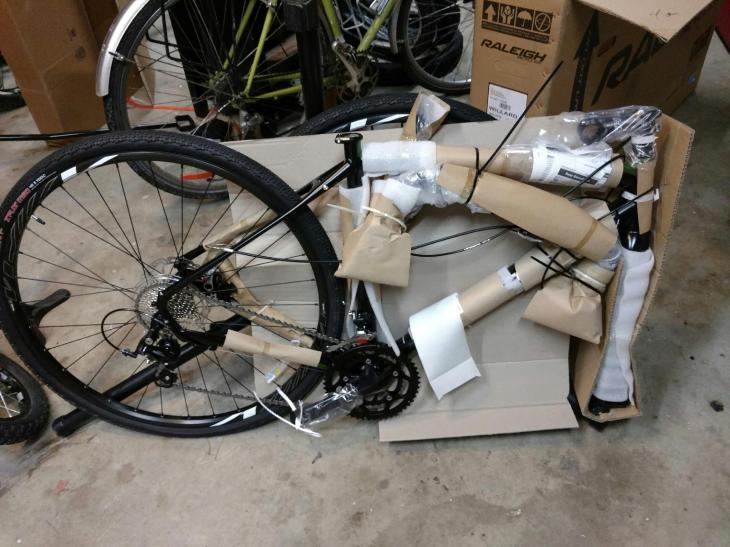
The Raleigh Willard yet to be assembled in Tim’s Garage.
He did a great job getting them ready. Here’s mine again newly assembled. (size 54)…
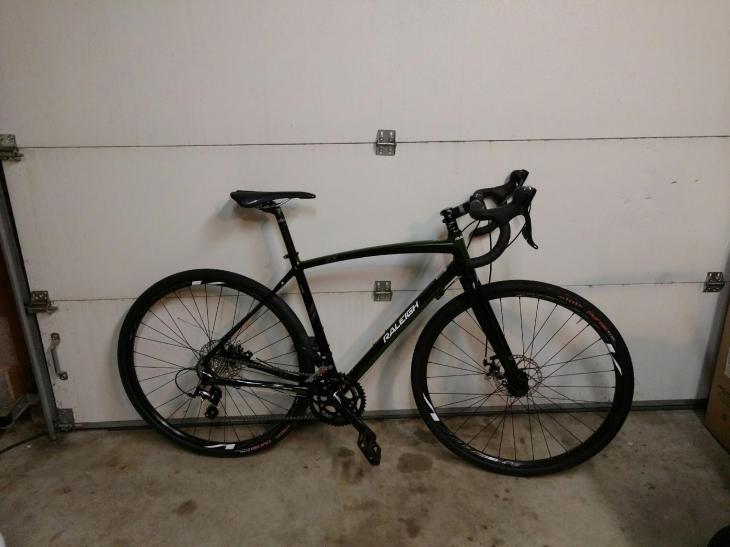
2015 Raleigh Willard I fully assembled
Modifications
I adjusted the setup from stock by adding and changing the following things:
- Bontrager Montrose Comp saddle (comfortable)
- Specialized CG-R carbon seatpost (vibration dampening)
- 11-32 rear casette (wider range with lower low and a higher high)
- Schwalbe Marathon Mondial 700×40 RaceGuard tires (more rubber)
- True Goo self sealing tubes (not taking any chances)
- Revelate Tangle frame bag (w/ platypus 1.8L bladder, spare tubes, food, battery packs, cue sheets, maps)
- Two cages (w/ 24 oz water bottles)
- Velo Cateye bike computer (simple distance / speed)
- Garmin Edge 800 GPS unit (direction )
- Gopro digital camera (fun)
- Cygolite Metro 400 headlight (> 8 hrs life w/ batt pack @ medium intensity)
- Seat bag (w/ tire change tool, extra tube, multitool w/chaintool, 4 CO2)
- Frame-mounted tire pump (not taking any chances)
I carried enough gear to change about four flats in a row. At the checkpoints there were boxes containing more tubes, spare chains, links, cables, and spare derailleur in case things went haywire.
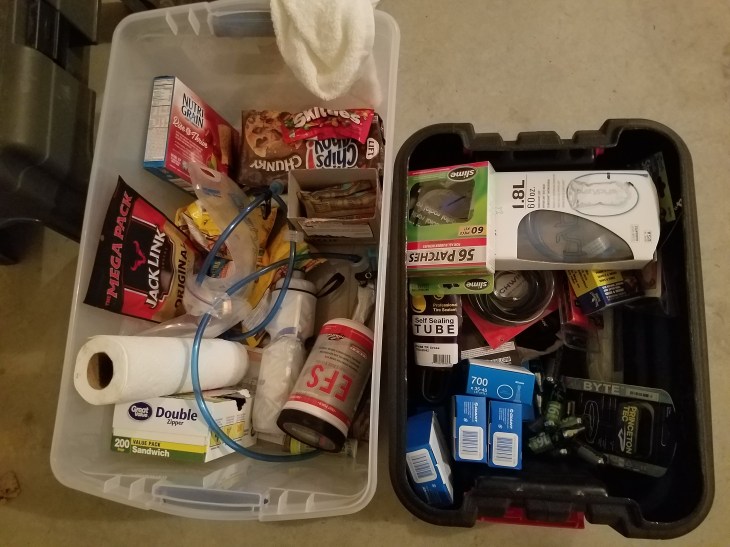
Boxes of gear
Each rider on our team carried one of these (somehow) on race day.
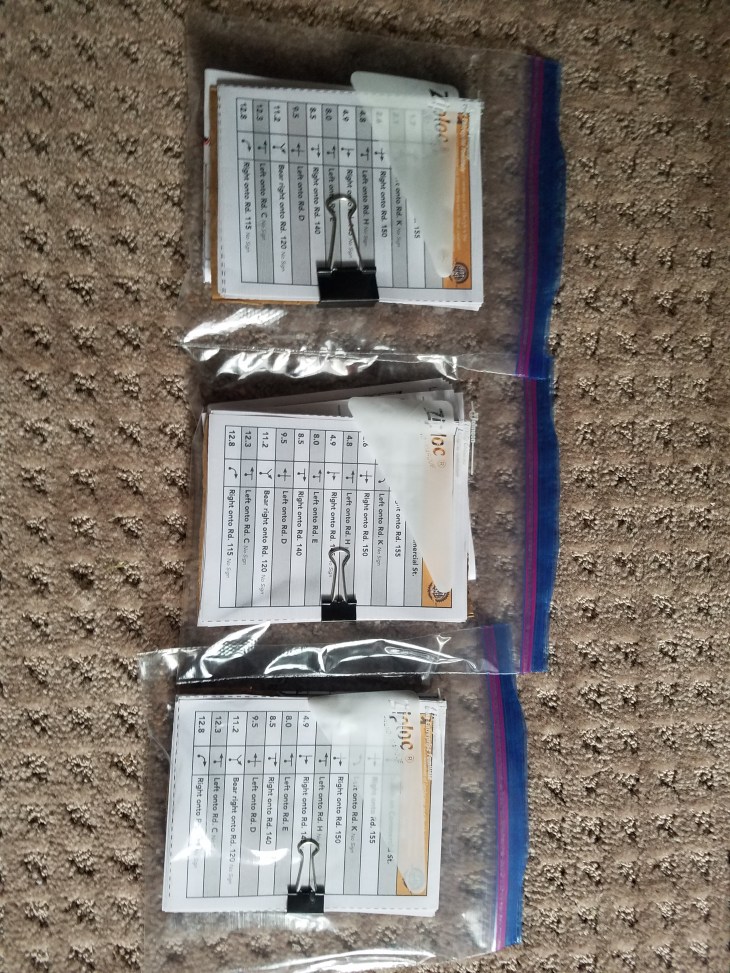
cue sheets and course maps
Here it is with most of the mods listed above.
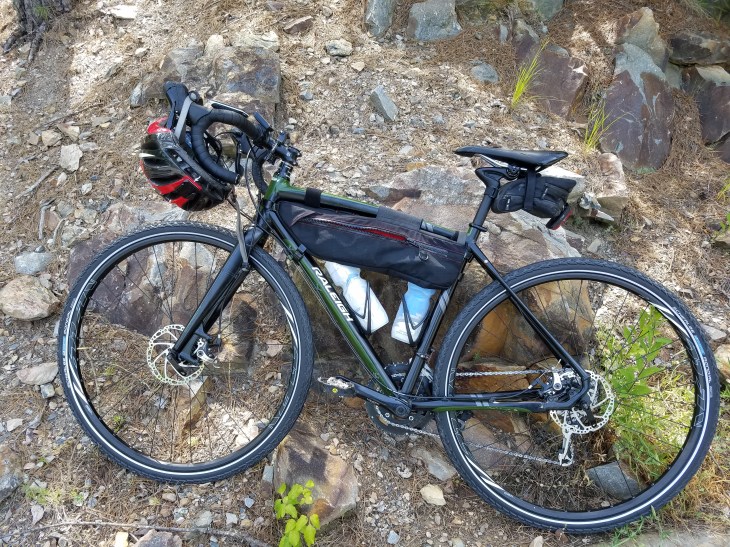
2015 Raleigh Willard I
Bike Summary
This bike performed flawlessly during the race. No mishaps, flats, chain or derailleur issues of any kind. Thanks Tim for all of the time you spent helping me to procure, assemble, modify and prepare this racehorse. This part of the plan went perfectly well.
lessons learned
Next time I will double-wrap the handlebars. I also will get better riding gloves (more padding). 206 miles on those roads == sore hands.
ruh roh gps
Problems with Garmin device going off course and pointing in the wrong direction. This annoyance tuned critical later, in the 3rd leg, as the field spread (more on that later).
he told me so
Tim specifically warned me about this problem and recommended that I not use the gpx tracks but rather navigate off the base maps and an image overlay with the course. I chose not to heed his sage advice and paid for it. Luckily I found help, in the form of an angel. (again more later)
more testing
I would have discovered the GPS routing problem if I had tested on location. I purchased the Garmin device a few weeks prior – not enough time.
The Training
My training was simple and went according to plan.
Gradually increase the number of hours spent per week and its longest ride. I had over four months until race day so there was plenty of time. If for any reason a week is skipped or reduced, cross those days off but keep going with the schedule.
The goal, get to 75% of the total mileage. I also wanted to get comfortable with the idea of spending long hours in the saddle, in the wind. I learned not to fight the wind but to accept it. (sort of)
It was during these long rides that I formulated my pacing, fueling and hydration strategies. I learned that I wasn’t fast, but I could comfortably average 14 mph (gun time) on most days and figured that would be good enough to get me across on June 4th.
Proposed Training Plan
#  Week of  Longest Day  Total Miles
1.  Feb  7           80          200
2.  Feb 14           90          210
3.  Feb 21           95          215
4.  Feb 28          100          220
5.  Mar  6          105          225
6.  Mar 13          110          230
7.  Mar 20          115          235
8.  Mar 27          120          240
9.  Apr  3          125          245
10. Apr 10          130          250
11. Apr 17          135          255
12. Apr 24          140          260
13. May  1          145          265
14. May  8          150          270
15. May 15          155          275
16. May 22          160          280
17. May 29          Taper
18. Jun  4          206
Simple is not always easy. This plan looks brutal until you realize that I could take days or weeks off anytime I wanted. This allowed my body to recover and get ready for the next big ride. It also gave my mind time to rest which kept things fresh.
Perform one long ride every weekend and around 120 miles on the weekdays. Vary miles and intensity on the weekday rides. 5×25, 4×30, 3×40, 2×60, 1×100, or all of the above. Ride hills, flats, and combination. Windy and calm days. Fast, medium, slow or mixed tempos. Hot, med and cold temps. Rain or shine. Keep the body guessing what is to come next but also on a steady training regime for endurance. Don’t just put in the miles, set goals. This is your chance to get dialed in. One ride is to get comfortable with high winds. Another hills, heat, rough gravel, or darkness. Maybe a particular ride is just to have fun.
My actual performance followed the plan pretty well. You can see there are some gaps in there but overall maintained the gradual buildup to 160 miles or 12 hours in the saddle. During this training stretch I did about eight centuries.
Actual Training Log
#  Week of  Longest Day  Total Miles
1.  Feb  7           78            -
2.  Feb 14           89          210
3.  Feb 21           90          233
4.  Feb 28           63          186 (gravel)
5.  Mar  6          108          225
6.  Mar 13           94          156
7.  Mar 20           80           80
8.  Mar 27           37          113
9.  Apr  3          116          253
10. Apr 10          132          269
11. Apr 17          110          228
12. Apr 24           97           97
13. May  1          117          266
14. May  8          150          285
15. May 15          106          130
16. May 22          163          306
17. May 29           54          172  (hills)
18. Jun  4          206
I managed to get most of these training miles using my GPS on Strava account.
One big concern is most of this was on pavement and the race of course is on gravel. There were about two or three weeks of gravel riding outside my parent’s hometown of Salina KS in Feb and March.
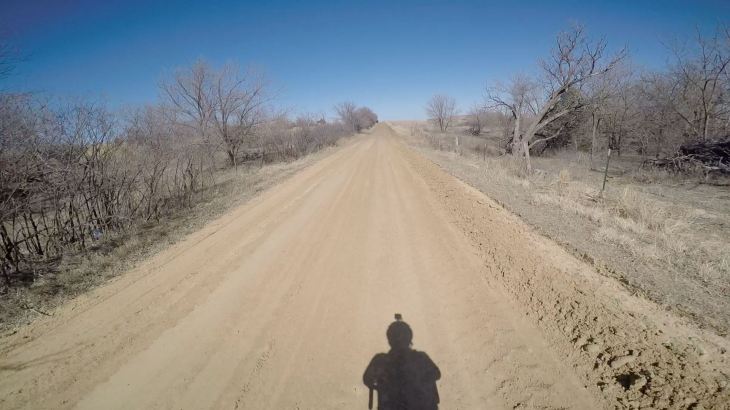
East of Salina Feb ’16
And also one brilliant training day outside cottonwood falls.
I mostly rode the Willard, trying to get it setup right and also accustomed to it. There were many great days of exploration.
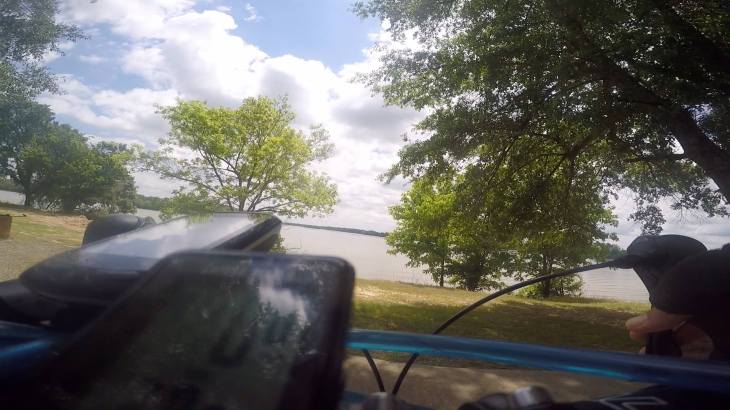
Along the Arkansas river, May ’16
Strength Training
The strength training helps with the intangibles of endurance cycling. The long hours in the saddle become difficult to endure without a strong upper body and core. To meet the demands of sudden bursts of anaerobic activity when lifting bike across water/mud or pulling hard to steer away from an onrushing hazard like a rut, rock, ditch, …
Weightlifting has been part of my fitness plan for many years. As I have grown older, I have decreased the weights and increased the reps. It’s not unusual for a particular set to have 50 reps for example.
My workout plan has three phases
One – Chest, Triceps
Two – Back, Biceps
Three – Legs, Shoulders
The particular workout session usually consists of a single phase within 30 minutes or less. I often superset between muscle groups. For example on phase three I can jump between a leg press and a shoulder exercise without stopping to rest between the sets. Back and forth. This adds an aerobic element to a workout session and helps to alleviate boredom.
The number of days per week will vary according to where I’m at on the bike.
If I am riding long hours, I will probably not go to the gym that day. Days with short or no rides I’m usually doing strength training. I focus on the fundamental and traditional exercises. Pushups, situps, pullups, dips, flies, leg presses, curls, etc.
Keep It Simple Stupid. No heavy sets. No squats, no barbells, no deadlifts.
Don’t ignore the legs. Leg presses always use high reps, low weights. Calf extensions follow the leg presses (on same machine) and also should be high reps. Leg curls if it doesn’t hurt on a given machine. Be careful, not all leg machines are good. Leg extensions never good.
Also maintain care with shoulders. Presses are done using dumbbells and perfect form. Military presses only with light weights and usually on a machine. Focus on the rear and lateral delts (helping to maintain a healthy rotator cuff).
These movements should feel good. If you feel pain, stop (the inverse of no pain no gain). If the pain associated repeats with that exercise across multiple days, find another way to work that muscle group.
The goal is to continue cycling for as long as possible which has nothing whatsoever to do with how much weight is on the bar or the amount of time spent lifting.
Short sessions means not dreading which keeps it fresh. Remain on lookout for new exercises or new ways of doing old ones.
Invest time doing core strengthening exercises. They can be performed during any phase. Use various types of movements to avoid overuse and injury. These movements will help with more time in the saddle, and in particular, down in the drops.
Training Summary
My training plan was successful in getting my body, mind and machine ready for the Dirty Kanza 200. The long rides exposed many weaknesses in my technique that had to be worked on. As I got better at training and recovering, my confidence grew.
I managed to add a little hill training into the last couple of weeks and would have liked starting it sooner. Other areas needing improvement is more time riding in places like the Flint Hills. One, maybe two fifty mile legs along a previous DK route would be a perfect way to access readiness of body and machine.
Hydration
For hydration I used Electrolyte Fuel System (EFS), two 24 oz bottles and a 1.8L bladder inside the frame bag on the bike. It was nice not having to wear a camelbak and could drink different types of fluid at the same time. For example, pure water in the bladder, and EFS in the bottles, was a typical setup.
I like the fluids cold (it’s the simple pleasures) and would always chill &/or ice fluids to the minimum temperature possible for any given ride.
At checkpoints this year our support team, lead by Cheri Parr (more on her later), provided bandanas loaded with ice and soaked in ice water, to wrap around our necks before setting off. These seemingly small details have a way of tipping the lever toward a successful outcome.
Hydro Summary
My hydro strategy was fine for DK200. I did experience a dehydration problem on the second leg of the DK race, but that was a problem with execution. A combination of incorrect mixture and not carrying enough pure water (should have carried one more liter in jersey).
Food
My nutrition plan was also simple.
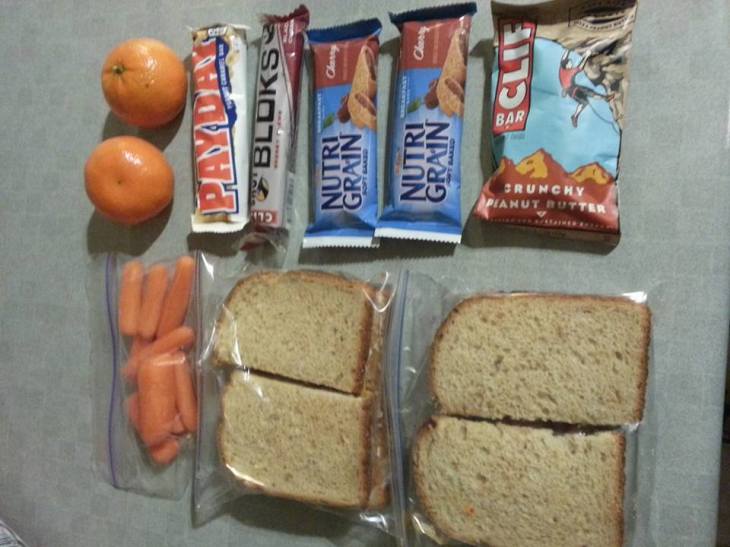
Typical frame bag goodies packed on a long ride
As you can see, I’m not big on the typical performance fuel products. I favor fresh foods over processed but will carry things like M&M’s, nutri grain bars and the like.
I experimented a bit foolishly and learned that salad-in-the-bag is not a good concept. 🙂
I also don’t have room in my bag for fresh produce on race day but will look for it at the checkpoints. Oranges, watermelons, peaches, apples, …, (all good).
Long into these rides (around 75 miles) I would stop at a local mart and get whatever they had available at the time and that sounded good. These impromptu items varied from chicken fingers, to pizza, corndogs, burritos, etc. For me, having something of substance late in the day is something that can be looked forward to early in the ride. But if I had that slice of pizza it was just a single.
I also learned to eat gradually during the long rides and start early as possible, i.e. at 10 miles. A PBJ or turkey sandwiches works well but only if eaten early on. 🙂
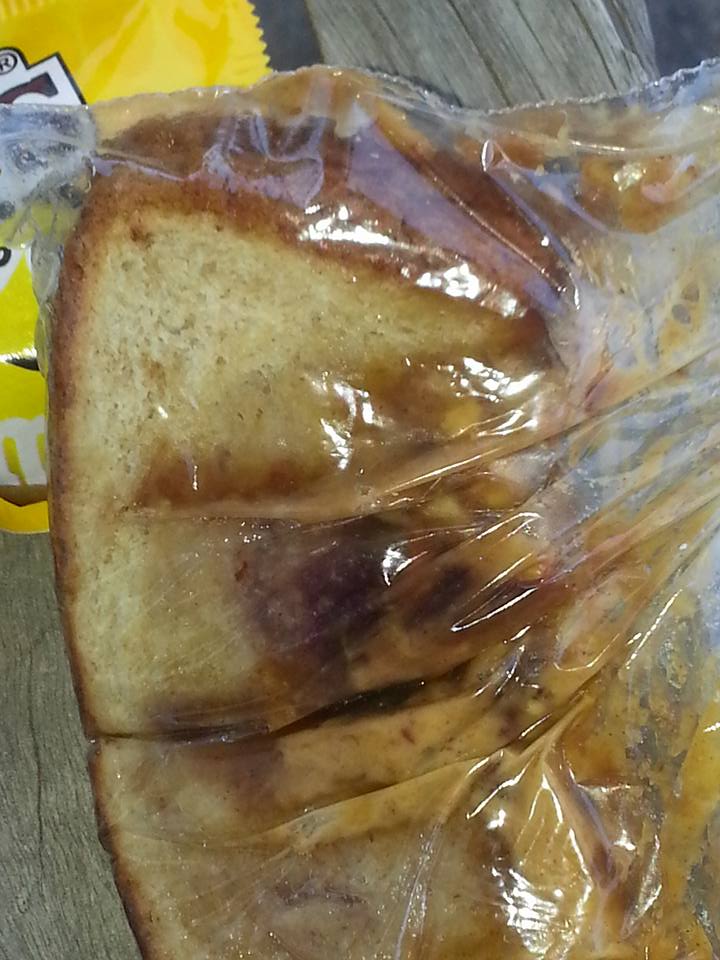
PBJ after about 110 miles on a hot day.
Food Summary
My nutrition strategy worked fine for long training rides, i.e. over 120 miles. But I found out on race day it doesn’t particularly hold up under the heat. This is an area of my plan that needs more work. Perhaps more of a reliance on the performance products. Stay tuned…
Next Post: Part III – Friday