Install Apache Directory Studio From Source on Rasberry Pi

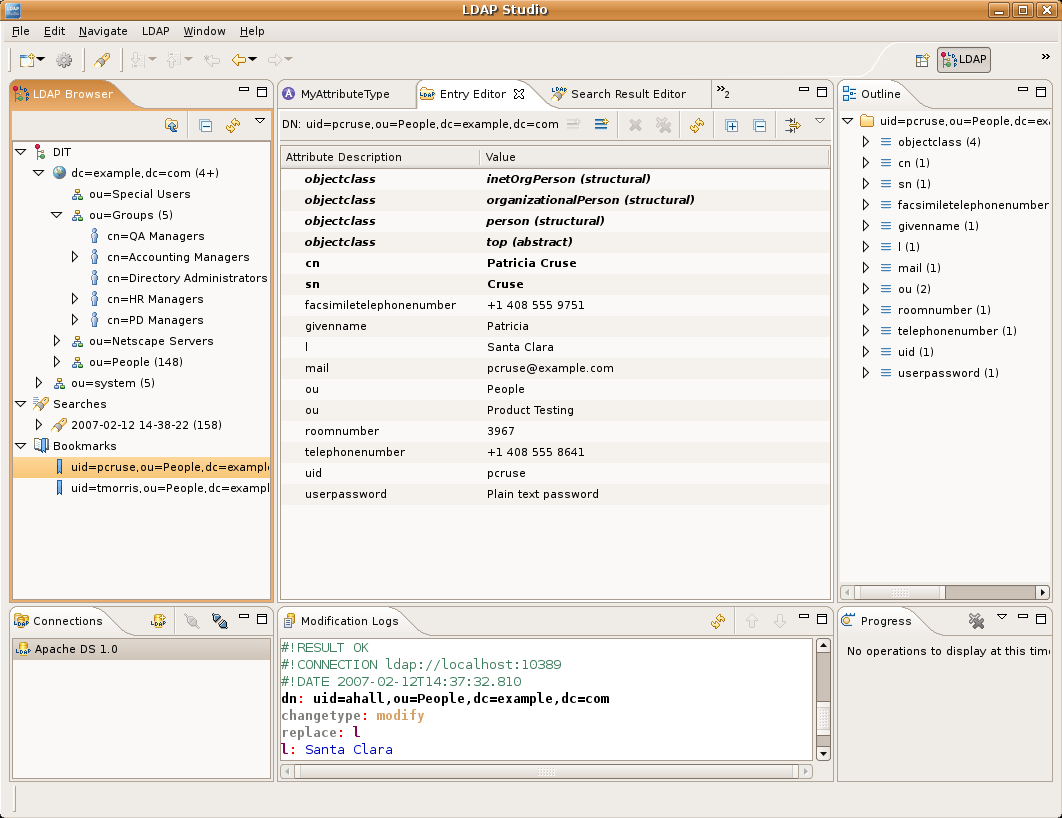
This post includes instructions to download Apache Directory Studio source code and install to a Linux machine. The instructions are tailored for a Raspberry Pi.

It includes an extra step to modify the pom.xml to add Eclipse runtime on Linux desktop for ARM processor.

It’s expected that the next release of Apache Directory Studio will include binaries for Linux ARM and so it won’t be necessary to build from source.

1. Preq it

```
sudo apt-get install git java
```

2. Git it

```
git clone https://github.com/apache/directory-studio.git
```

3. Arm it

```
cd directory-studio
vi pom.xml
# add (around line 167):
<environments>
...
  <environment> 
     <os>linux</os>
     <ws>gtk</ws>
     <arch>aarch64</arch>
  </environment>
...  
</environments>
...

Save and exit

4. Build it

```
mvn -f pom-first.xml clean install
mvn install -DskipTests=true
```

5. Install it

```
cp ./product/target/products/ApacheDirectoryStudio*.tar.gz ~/Tools
cd ~/Tools
tar -zxvf ApacheDirectoryStudio*.tar.gz
```

Where *Tools* is your target for applications.

6. Run it

```
cd ApacheDirectoryStudio
sudo ./ApacheDirectoryStudio
```

7. Script it

Because Apache Directory Studio has to run as root we have to create a bash script to execute.

```
# alter the paths to match your env:
vi ~/Tools/ApacheDirectoryStudio/start.sh
# add:
sudo /home/user/Tools/ApacheDirectoryStudio/ApacheDirectoryStudio
```

Save and exit.

8. Execute it

```
chmod a+x start.sh
```

9. Launch it

```
sudo vi /usr/share/applications/studio.desktop
# Paste info:
    [Desktop Entry]
    Type=Application
    Name=Apache Directory Studio
    Comment=LDAP Browser
    Icon=/home/user/Tools/ApacheDirectoryStudio/configuration/org.eclipse.osgi/78/0/.cp/studio.png
    Exec=/home/user/Tools/ApacheDirectoryStudio/start.sh
    Terminal=false
    Categories=Application;Development;
```

Save and exit. Where “/home/user/Tools” is where you put the binaries. Launcher will be under the “Programming” menu item.

Install Apache Netbeans From Source on Rasberry Pi

This post includes instructions to download Apache Netbeans source code and install to a Linux machine. The instructions are tailored for a Raspberry Pi.

The advantage of using a Pi is that Apache Netbeans works well in resource constrained environments. This makes it ideal for usage on that device.

Download Sources

We suggest the following location for your download

Do These Steps

1. Prereqs / Get it

```
sudo apt-get install ant java
wget https://dlcdn.apache.org/netbeans/netbeans/24/netbeans-24-source.zip .
```

2. Build / Install it

```
unzip ./netbeans-24-source.zip -d /tmp/netbeans
ant -Dcluster.config=basic build
mkdir ~/Tools
cp -r nbbuild/netbeans ~/Tools
```

3. Run it

```
cd ~/Tools/netbeans/bin
./netbeans
```

4. Launch it

```
sudo vi /usr/share/applications/netbeans.desktop
# Paste info:
[Desktop Entry]
Type=Application
Name=Netbeans
Comment=Java IDE
Icon=/home/user/Tools/netbeans/nb/netbeans.png
Exec=/home/user/Tools/netbeans/bin/netbeans
false=Terminal
Categories=Application;Development;
```

Where /home/user is the location of user’s home folder on the platform. Launcher will be under the “Programming” menu item.

Top 10 Reasons Not To Do a Top 10 List (as a Lightning Talk)

Background:

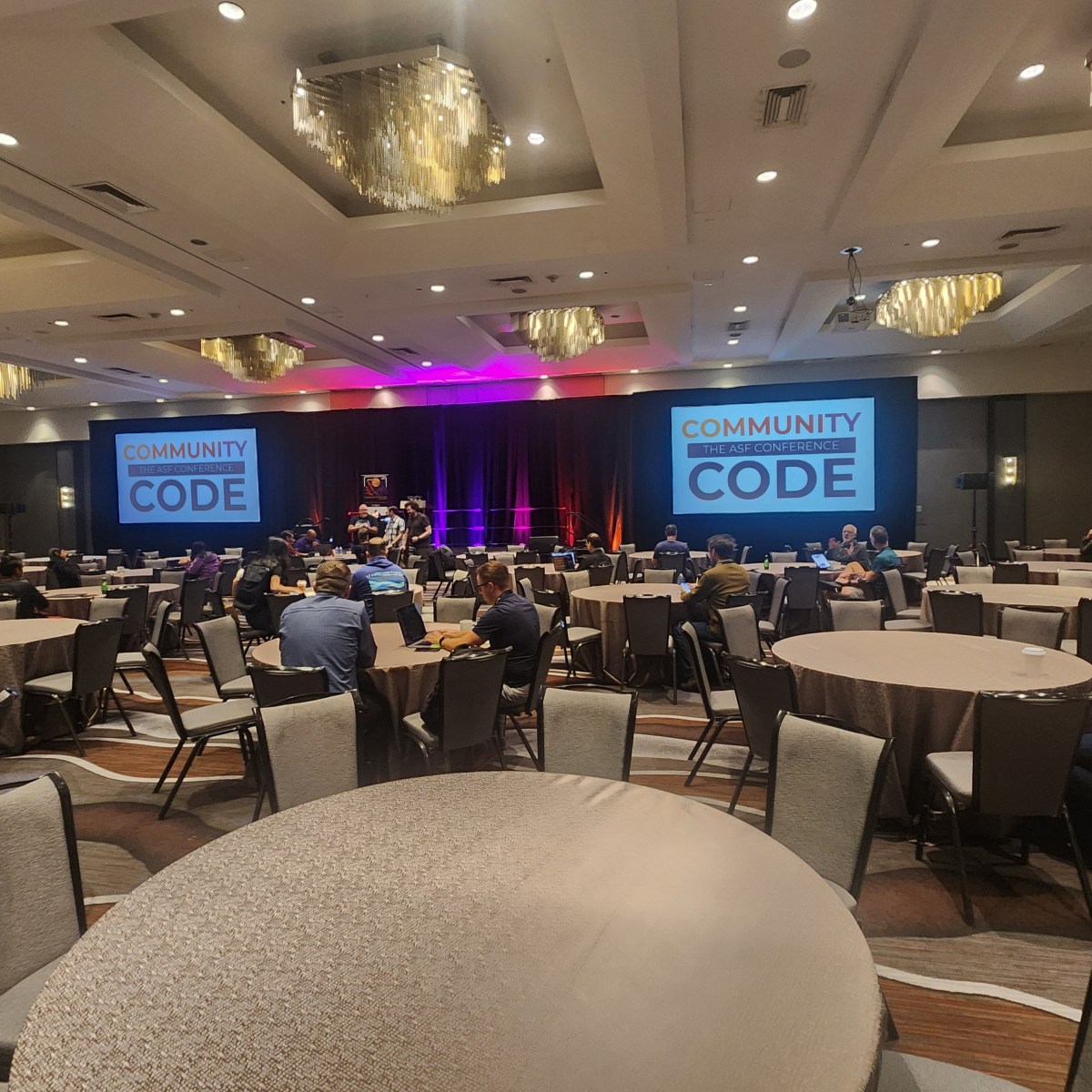
Community Over Code (a.k.a. ApacheCon) has a tradition of closing its conference with a one hour session, held in the general assembly area, called “Lightning Talks”. Each speaker who participates is allotted at most 5 minutes to discuss anything they like. The only rule, other than 5 minutes, is that slides are NOT allowed.

It has long been a favorite of mine. The talks are usually silly, although they can be serious and sometimes quite moving.

For some reason, I allowed myself to be “talked into” getting on stage this evening.

My version:

10. Two words: No slides (Maybe could get away with cat memes).
9. We can’t wait to hear your amusing antidotes boiled into a Top 10 List (said no-one ever).
8. You might get away with it if they liked you, but they don’t. And, don’t you work on Apache Problematic, so even your tech stack sucks.
7. Not even halfway and You’ve Already Lost Them (They’re on their phones).
6. You could manage to generate interest (with a real topic). But, you’d just blow it trying to be funny.
5. Do you think this is Comedy Con? It’s a Technology Conference. 
4. It’s called Attention Span OK? Too many items to keep track of.
3. Top 10 Lists Should Be Funny. You’re No David Letterman.
2. Who put you up to this? Was it Chris? Hello! He’s Manipulating You! (He just wants to watch you squirm)
1. Because, ChatGPT can do it better?

ChatGPT’s version:

10. They’re Overused: Everyone makes top ten lists. Why not stand out by doing something different?
9. Restrictive: You might have 11 great ideas—or only 3. Forcing it into a top ten list is just… limiting.
8. Fake Drama: The suspense of counting down from 10 to 1 is overrated. We all know #1 is just as arbitrary as #7.
7. It’s Cliché: Top ten lists are the potato chips of content—they’re easy to consume but not always satisfying.
6. Ranking is Hard: Do you put the funny point at #4 or save it for #1? It’s an existential crisis waiting to happen.
5. Buzzfeed Has it Covered: They’ve already made every possible top ten list you can think of. Why compete?
4. Everyone Skips to the End: Admit it, most people scroll straight to #1 without reading the rest.
3. It’s Lazy: Why dig deep into a topic when you can just slap together a list? A deep dive can be more rewarding.
2. Unnecessary Pressure: Who needs the stress of coming up with exactly ten reasons? It’s a lot of pressure, honestly.
1. You’ll End Up Making One Anyway: By the time you reach reason #10, you’ve already written a top ten list—proving you couldn’t resist the temptation!

The second set was produced by ChatGPT. The first was authored by me. Which one was better? I’ll allow you to be the judge.

I asked the audience which one they preferred and lets just say it wasn’t me :/

On Becoming a Member

A couple of days ago, an unexpected message arrived in my inbox, inviting me to become a member of the Apache Software Foundation.

After the initial surprise wore off I began to process what it meant.  Obviously, it’s an honor.  But there’s more to it than that.

About five years ago we began having discussions with a colleague, Emmanuel Lécharny, about moving the OpenLDAP Fortress project into the ASF, as a sub-project of the Apache Directory, and that topic is covered here.

Since that time, the typical path of escalating involvement within a particular project was followed.  Contributor->Committer->PMC, …

What I learned during this period of time can’t be catalogued into a single blog post.  Careers are made (and sometimes broken) on transitional paths such as these.  There were challenges, pressures, (personal) shortcomings to be addressed, highs, lows and everything between.

It would take another post to cover all of the people involved, including family, fellow project members (both at ASF and OpenLDAP), business partners, work colleagues and the many other shoulders upon which I stood.  Thankful doesn’t begin to cover the feelings, I’m still processing, trying to make sense of it all.

Now, after having satisfied those original technology goals, it’s time to broaden the perspective to a wider field.  The elements contained within this new field of vision have yet to come into a sharp focus.

What I do know, it will be more of a societal thing than technological.

For example, having a daughter just now starting her career in technology, what will it be like when she enters into the workplace?  Will organizations such as the Apache Software Foundation be inclusive to her (as it was to me) or will there be barriers put in place barring or slowing down entry?

What must change and what do we leave alone?  How do we ensure the essential characteristic of the ASF remains in place while making targeted changes (planting/pruning/weeding) to clear out space for new growth, allowing new opportunities for new segments of society?

These are the types of questions I’m asking myself.  An incredible opportunity to follow a new course alongside an unmistakable concern of not rising to the occasion.


Why ApacheCon

It’s the middle of the night, just hours before my return flight home, and can’t sleep.  The tape recorder inside my mind continues to play and won’t stop.  And so, much like my first Apachecon, I choose to write rather than toss and turn.

The theme of this week’s entry is ‘Why ApacheCon’.  I mean, after seven trips, on both sides of the pond, one might expect to grow weary of the routine.  I’m not saying that I don’t like traveling.  It’s just that, well, after almost thirty years as a professional software developer, I’ve had my fair share.

But here’s the deal, it’s not the trip that makes it worthwhile although I’ll admit the venues are always nice.  Certainly Montreal in September is not a bad gig.

It’s the people, and their stories, that make this event special.

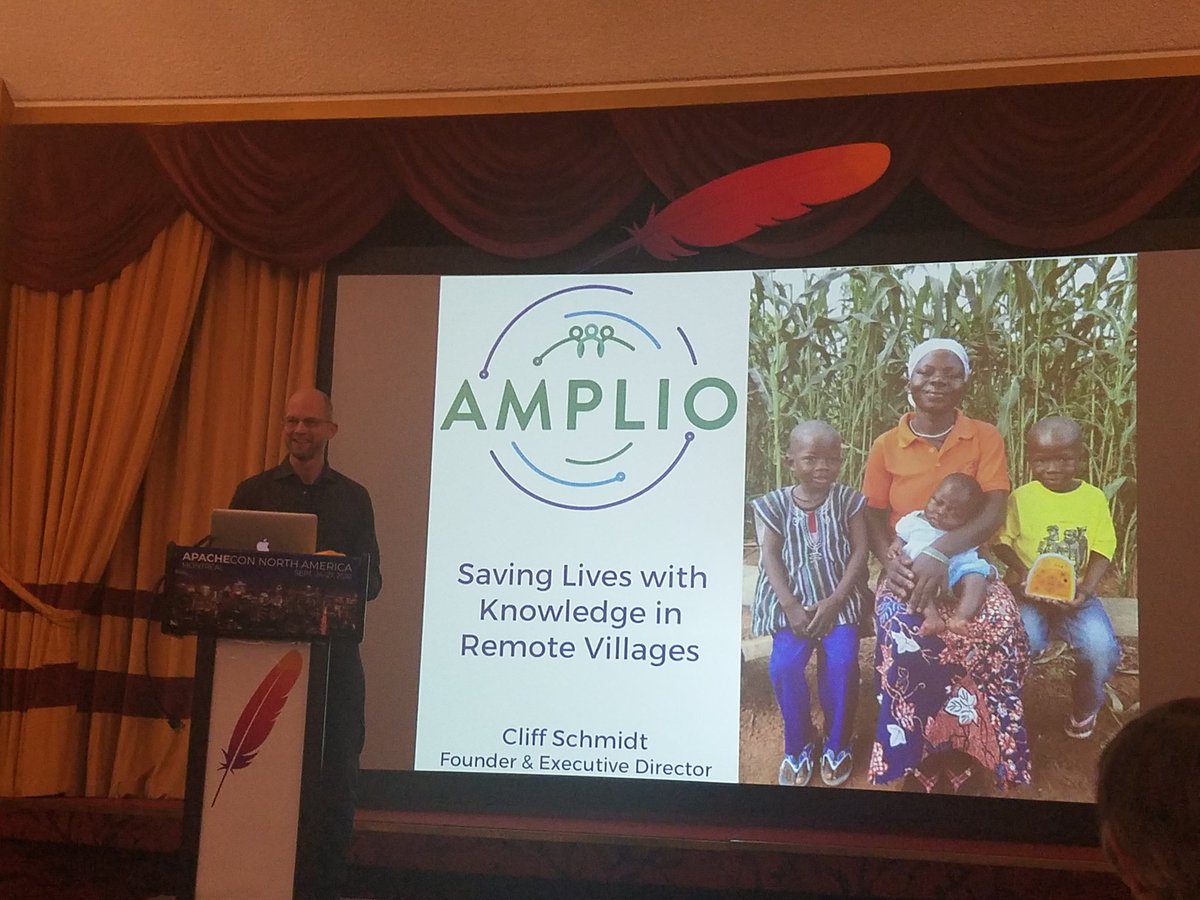
A perfect example is Cliff Schmidt, founder of Amplio, who left a lucrative technology career, to pursue a new mission — saving lives in Africa through education via starting a non-profit that supplies battery operated listening devices, i.e. ‘talking books’, to poor rural farmers in Ghana.

DoBbhPxVsAA6wK-

Cliff Schmidt

Another example of Apache members doing good is Myrle Krantz who’s mission is building an open source system for core banking as a platform.  The reason?  To provide a reliable and affordable solution for the world’s 2 billion unbanked, via Apache Fineract.

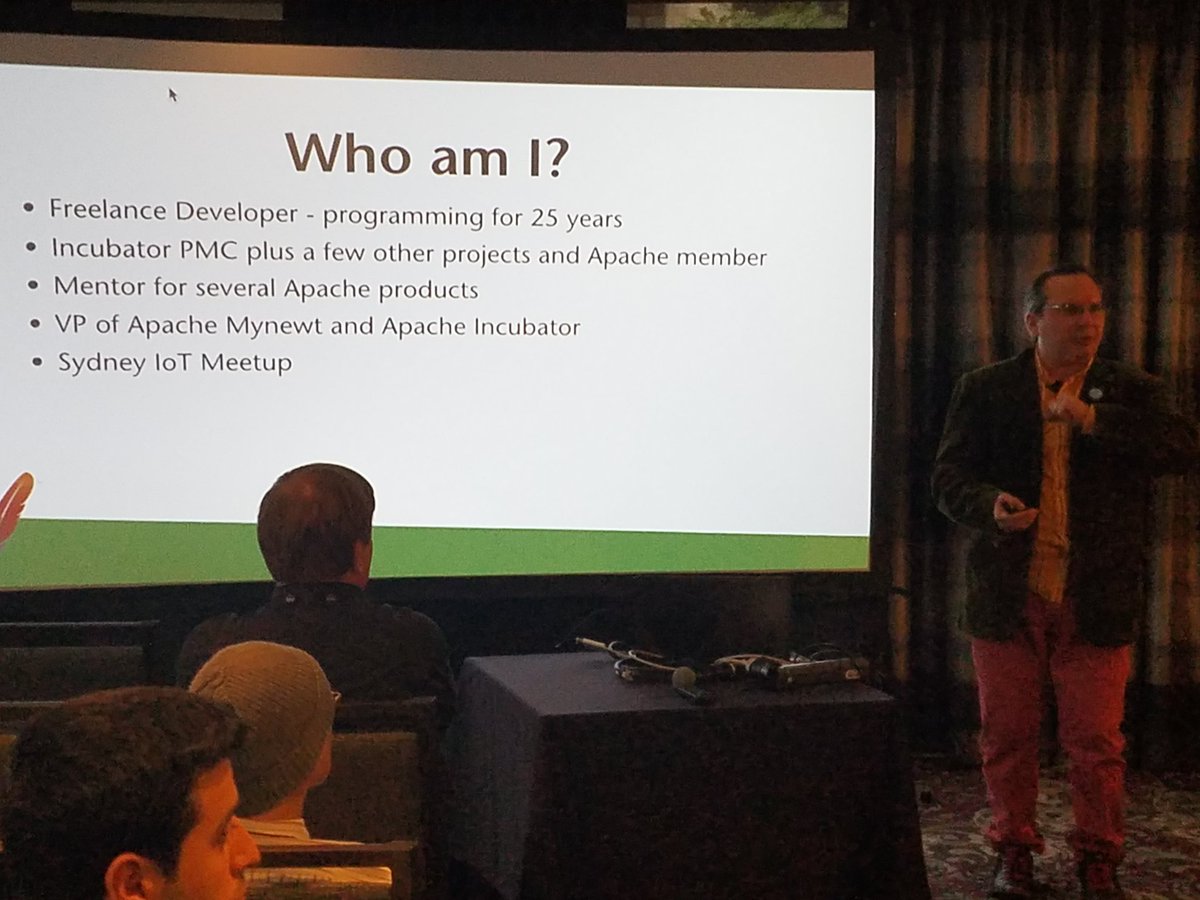
There’s also Justin McClean, who’s working on an incubating project to provide a real-time operating system featuring a robust and reliable platform to run embedded systems, a.k.a IoT.  The project is Apache Mynewt.  With Mynewt the playing field has been leveled, opening the dedicated hardware market to anyone with a good idea and access to a cheap embedded processor.

Dn_m2T-WkAU8UTS

Justin McClean

And Christopher Dutz who’s striving to break Siemens’ stranglehold on the programmable logic controller market, to offer cost-effective options to gather their data, for small to medium-sized manufacturing facilities.  His incubating project is Apache PLX4J.  This affords small business’ the same capabilities of command and control of their equipment, enabling them to compete with giant corporations

Dn_nTU8XkAEBvxs.jpg large

Christopher Dutz

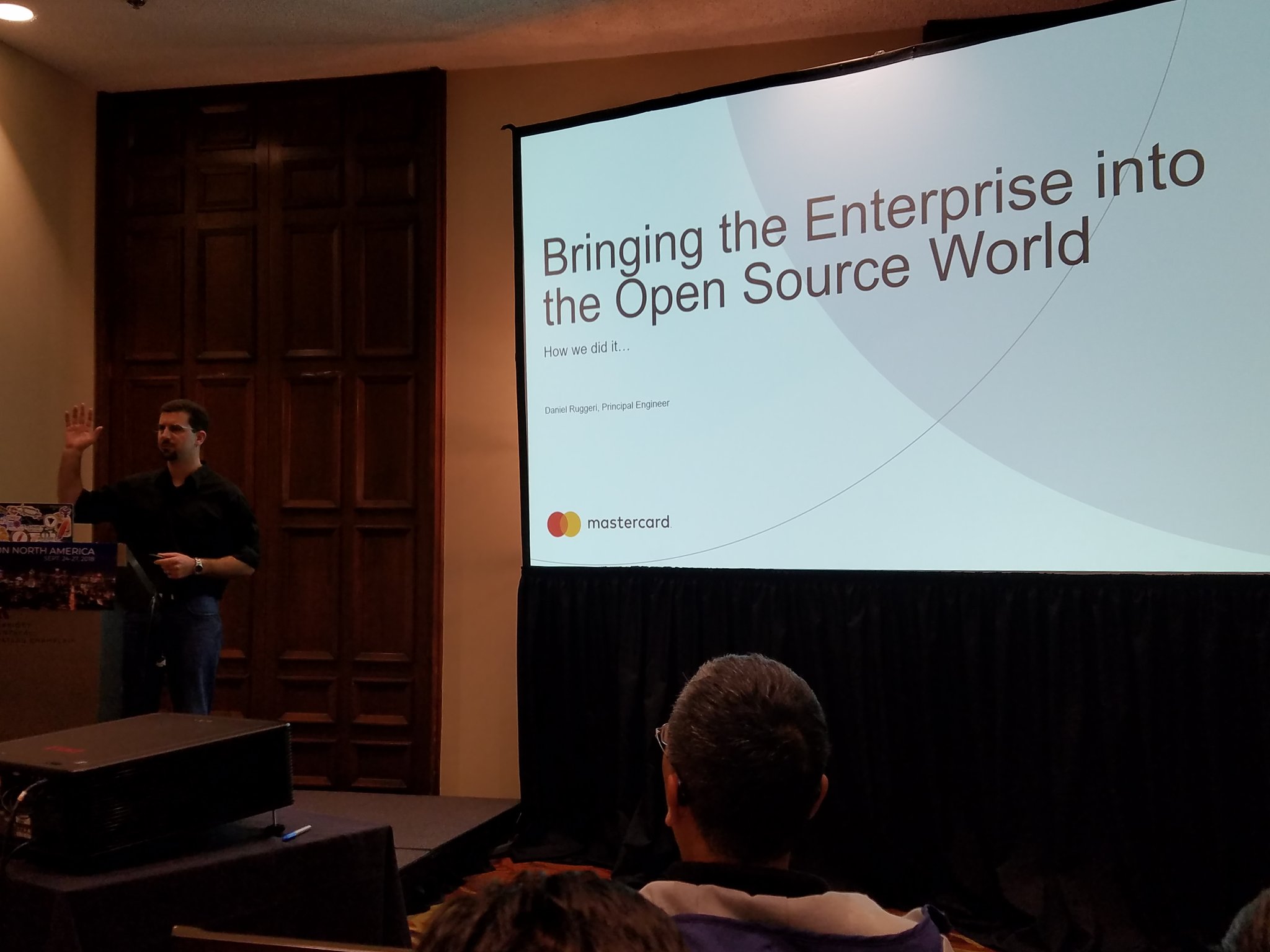
Or how about Daniel Ruggeri, who’s taken it upon himself to create (and teach) a college-level course on how to introduce a successful open source practice into the enterprise.  This brings more talent in, enabling innovation, across a broader spectrum of companies.

DoBc3i2UwAEkK1C.jpg large

Daniel Ruggeri

What do these people have in common?  Bringing about positive change in the world, via open source projects.

This is why I come to ApacheCon.  It’s not the beautiful venues.  It’s not the education and learning.  It’s not the fun gatherings.  (Although these things are good too of course.)

It’s so that I may be inspired by stories such as these.

Secure Web Apps with JavaEE and Apache Fortress

ApacheCon is just a couple months away — coming up May 16-18 in Miami. We asked Shawn McKinney, Software Architect at Symas Corporation,  to share some details about his talk at ApacheCon. His presentation — “The Anatomy of a Secure Web Application Using Java EE, Spring Security, and Apache Fortress” will focus on an end-to-end application security architecture for an Apache Wicket Web app running in Tomcat. McKinney explains more in this interview.

Source: Secure Web Apps with JavaEE and Apache Fortress

Project Link: Apache Fortress Demo Project